


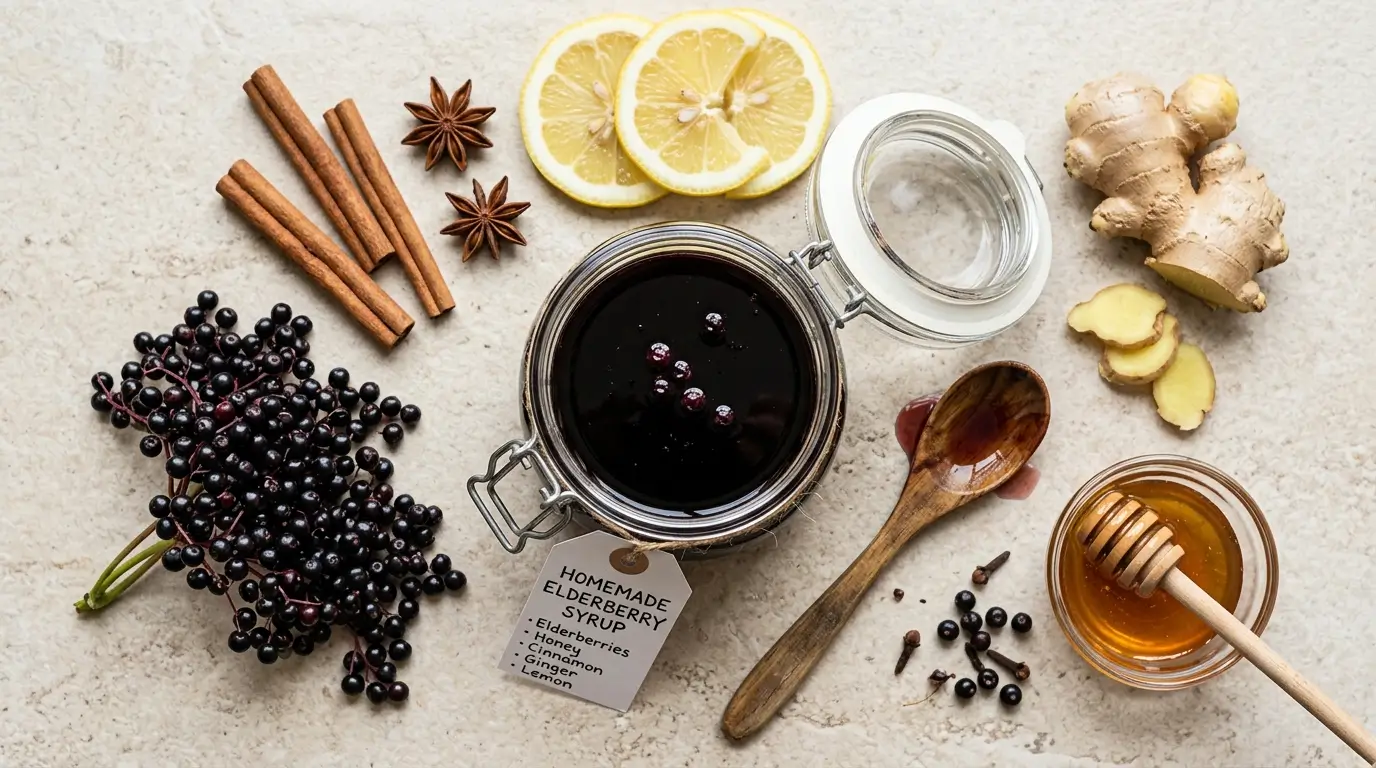
If you want a rich, dark, fruity elderberry syrup made with cooked elderberries, warm spices, lemon, and honey, this homemade elderberry syrup recipe is simple to prepare and delicious diluted into a drink or drizzled over breakfast foods. For an established recipe reference, see this elderberry syrup recipe from BBC Good Food.
Important safety note: Raw or unripe elderberries, as well as elderberry stems, leaves, and other parts of the plant, can contain toxic compounds. Elderberries must be cooked thoroughly before use. The NCCIH also notes that evidence for elderberry’s health effects is limited, so this syrup should be treated as a food preparation, not a cure or substitute for medical care.
Table of Contents
What Is Elderberry Syrup & Why You’ll Love It
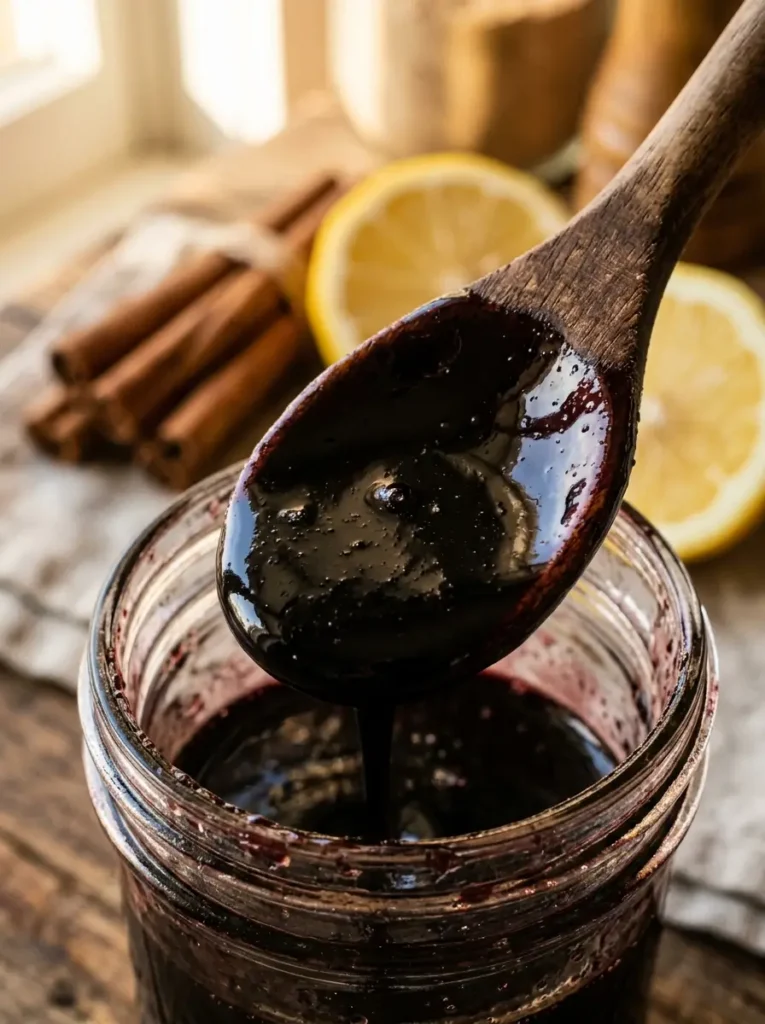
Elderberry syrup is a cooked fruit syrup made by simmering ripe elderberries with water and spices, straining the liquid, and sweetening it with honey or sugar. The finished syrup is dark purple, tangy, fruity, and aromatic, with a flavor that works well in warm drinks, sparkling water, yogurt, porridge, pancakes, and desserts.
The traditional preparation is straightforward but requires careful handling. The berries are simmered until soft, then strained thoroughly to remove the seeds, skins, and remaining plant material. Honey is added only after the liquid has cooled somewhat, helping preserve its flavor and preventing it from being overheated.
Unlike a jam, elderberry syrup is thinner and designed to pour easily. You can make it more concentrated by reducing the liquid further or create a lighter cordial by adding extra water after straining.
The flavor can be adjusted with cinnamon, ginger, cloves, orange peel, lemon juice, or vanilla. The result is a flexible homemade pantry staple that feels especially comforting during cool weather.
Key Benefits:
- Made with simple fruit, water, spices, and honey.
- Naturally rich in dark berry flavor.
- Useful as a topping, drink concentrate, or dessert sauce.
- Easy to prepare with fresh, frozen, or dried elderberries.
- Can be adjusted to be sweeter, sharper, or more spiced.
- Alcohol-free and suitable for a family-friendly kitchen.
- Freezer-friendly when stored in small portions.
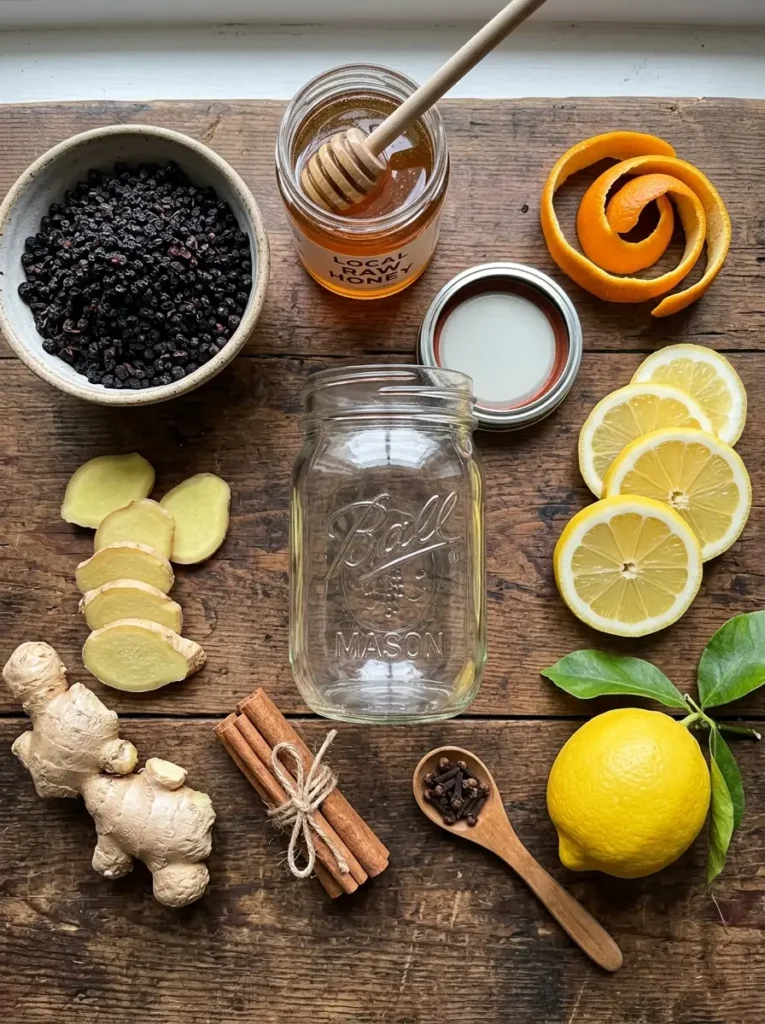
🍳 Equipment You’ll Need
- Medium saucepan — cooks the berries and spices evenly.
- Fine-mesh strainer or cheesecloth — removes seeds, skins, and solids.
- Wooden spoon or potato masher — helps release juice from the softened berries.
- Clean glass bottle or jar — stores the finished syrup in the refrigerator.
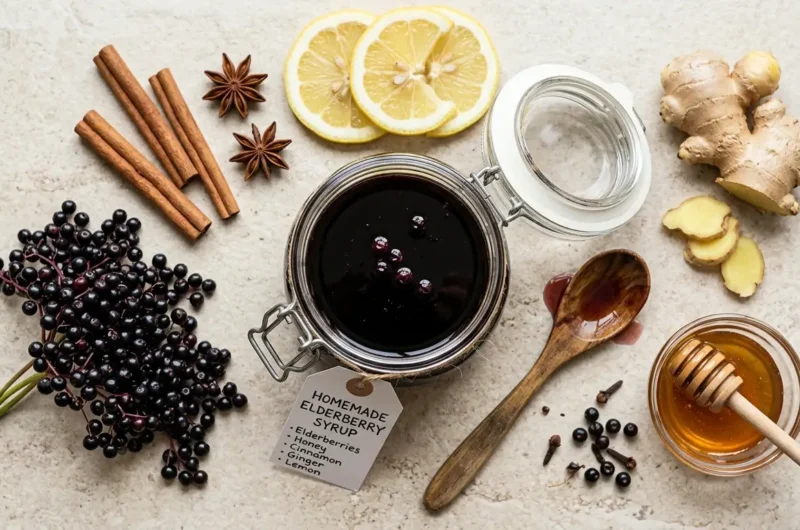
How to Make Elderberry Syrup Recipe (Best Elderberry Syrup 2026)
Course: sauceCuisine: EuropeanDifficulty: Easy12
tablespoons10
minutes30
minutes40
minutesA rich homemade elderberry syrup made with fully cooked elderberries, honey, lemon, ginger, cinnamon, and cloves. This dark, fruity syrup is delicious diluted into drinks or served over yogurt, pancakes, porridge, and desserts. Always cook elderberries thoroughly and remove stems before use.
Ingredients
🫐 Elderberry Syrup Base:
½ cup (about 75g) dried elderberries
or 1 cup (about 150g) fresh or frozen elderberries, stems completely removed
4 cups (960ml) water
1 cinnamon stick
½ tsp ground cinnamon, optional
¼ tsp ground cloves
1-inch (2.5cm) piece fresh ginger, thinly sliced
1 tbsp fresh lemon juice
½ cup (170g) honey, added after cooling
✨ Optional Add-Ins:
2 strips lemon or orange peel
1 star anise
2 cardamom pods
1 tsp vanilla extract, added after cooking
Maple syrup instead of honey
Directions
- If using fresh or frozen elderberries, remove every stem, leaf, and unripe berry. Use berries only.
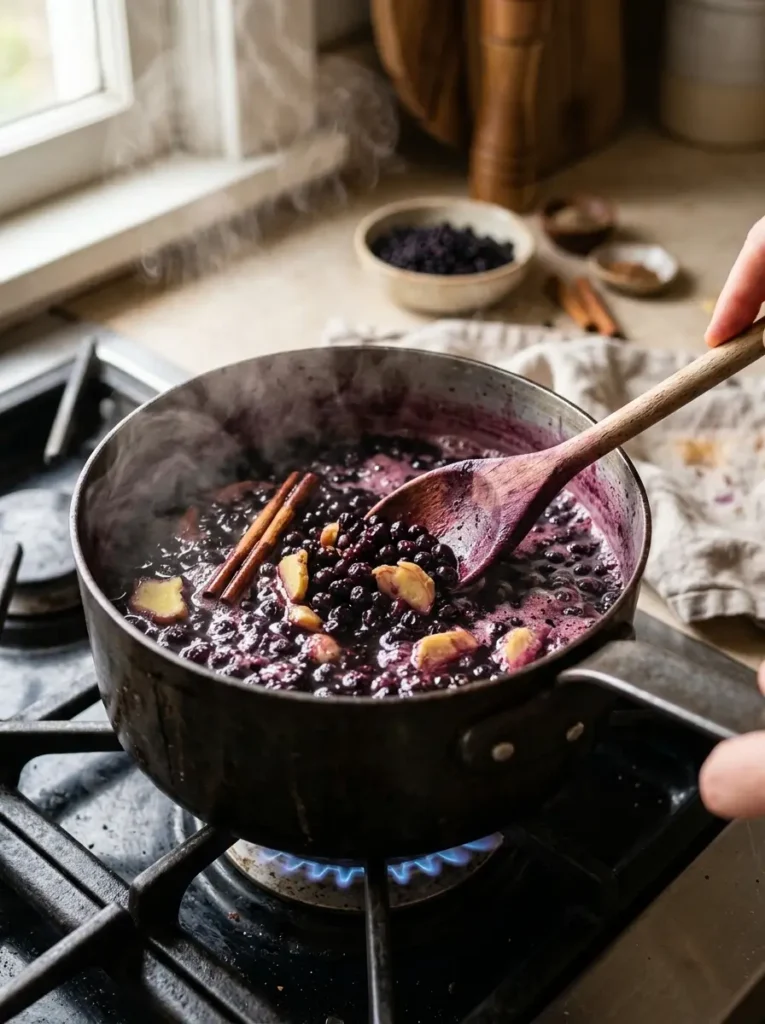
- Place the elderberries, water, cinnamon stick, cloves, and ginger in a medium saucepan.
- Bring the mixture to a boil over medium-high heat.
- Reduce the heat and simmer uncovered for 25–30 minutes, stirring occasionally.
- Use the back of a wooden spoon to gently crush the softened berries and release their juice.
- Continue simmering until the liquid has reduced by approximately half.
- Remove the saucepan from the heat.
- Pour the mixture through a fine-mesh sieve lined with cheesecloth into a heatproof bowl or clean saucepan.
- Press the berries gently to extract the liquid, then discard the cooked solids.
- Stir in the fresh lemon juice.
- Allow the strained liquid to cool until warm rather than hot. If using honey, wait until it is below approximately 104°F (40°C) before adding it.
- Whisk in the honey until completely dissolved.
- Pour the syrup into a clean glass jar or bottle.
- Cool completely, seal, and refrigerate.
- Use as a topping, dilute into water or tea, or add to yogurt and breakfast dishes.
Recipe Video
Notes
- Never use raw elderberries — raw or unripe berries can contain toxic compounds and must be cooked thoroughly.
- Remove all stems and leaves — only the ripe berries should go into the saucepan.
- Do not add honey to boiling liquid — cool the strained syrup first to protect the honey’s flavor and avoid unnecessary overheating.
- Strain very carefully — remove seeds, skins, stems, and all remaining solids before bottling.
- Keep refrigerated — homemade syrup is not automatically shelf-stable and should be refrigerated or frozen.
Elderberry Syrup Variations
| Variation | Key Change | Result |
|---|---|---|
| Classic Honey Syrup | Elderberries, cinnamon, ginger, cloves, and honey | Rich, warming, and traditional |
| Lemon Elderberry Syrup | Fresh lemon juice and lemon zest | Bright, tangy, and refreshing |
| Orange Spice Syrup | Orange peel, cinnamon, and star anise | Fragrant and festive |
| Ginger-Forward Syrup | Extra fresh ginger | Warm, spicy, and aromatic |
| Sugar-Sweetened Syrup | Granulated sugar replaces honey | Glossy and longer-lasting |
| Elderberry Cordial | More water and less reduction | Lighter and ideal for diluting into drinks |
The Classic Honey Syrup is the best place to begin because it balances fruit, spice, and sweetness. The Orange Spice Syrup is especially enjoyable during autumn and winter, while the Elderberry Cordial is better if you want a lighter drink concentrate.
What To Serve With Elderberry Syrup
Elderberry syrup is versatile and can be used in both breakfast and dessert recipes.
🍽️ Food Pairings
- Pumpkin bread — drizzle it over our Pumpkin Bread Recipe for a fruity contrast to the warm spices.
- Zucchini bread — spoon it over our Zucchini Bread Recipe with a little Greek yogurt.
- Chocolate zucchini bread — a small amount of syrup cuts through the richness of our Chocolate Zucchini Bread.
- Acai bowl — swirl it over our Acai Bowl Recipe for extra berry flavor.
- Peach crisp — serve it alongside our Peach Crisp Recipe as a tart fruit sauce.
- Plum compote — combine a teaspoon with our Plum Recipe for a deep berry-fruit topping.
- Chicken rice bowl — use a small amount in a savory berry vinaigrette with our Chicken Rice Bowl Recipe.
- Watergate salad — serve the syrup separately as a bright fruit topping alongside our Watergate Salad Recipe.
☕ Beverage Pairings
- Warm water with lemon — creates a simple, comforting drink.
- Sparkling water — dilute the syrup for a refreshing berry cordial.
- Herbal tea — add a small amount after the tea has cooled slightly.
- Cold milk — a fruity alternative to flavored milk or dessert drinks.
Expert Tips for Perfect Elderberry Syrup
✅ Use only ripe berries — remove green, unripe, damaged, or moldy berries before cooking.
✅ Remove stems carefully — stems and other elder tree parts should not be included in the syrup.
✅ Cook the berries thoroughly — raw elderberries can contain toxic compounds, while cooking helps eliminate this concern according to the NCCIH.
✅ Strain carefully — remove the seeds, skins, and solids before bottling.
✅ Cool before adding honey — stir honey into a warm rather than boiling liquid.
✅ Adjust sweetness after straining — the final flavor is easier to judge once the berry liquid has been separated from the solids.
✅ Use clean storage containers — clean bottles or jars help protect the syrup during refrigeration.
✅ Do not make medical claims — elderberry syrup may be enjoyable, but evidence for preventing or treating illness remains limited.
Storage Instructions
| Storage Method | Duration | Pro Tip |
|---|---|---|
| Refrigerator | Up to 2–3 months | Store in a clean, sealed glass bottle. |
| Freezer | Up to 6 months | Freeze in small jars or ice-cube trays. |
| Room temperature | Not recommended | Homemade syrup should be refrigerated unless using a tested preservation method. |
| After opening | Refrigerated | Use a clean spoon and check for mold, fermentation, or unusual odors. |
Make-Ahead Tip
Elderberry syrup is ideal for making ahead because it keeps well in the refrigerator and freezes in convenient portions. Freeze it in ice-cube trays, then transfer the cubes to a sealed freezer bag. One cube can be added to warm water, tea, yogurt, or a smoothie whenever needed.
Nutrition Per Serving
| Nutrient | Amount | % Daily Value |
|---|---|---|
| Calories | 45 kcal | — |
| Carbohydrates | 12g | 4% |
| Sugar | 10g | — |
| Protein | 0g | 0% |
| Fat | 0g | 0% |
| Fibre | 1g | 4% |
| Sodium | 2mg | 0% |
Approximate values for 1 tablespoon of elderberry syrup sweetened with honey. Exact nutrition depends on the quantity of honey and the final syrup reduction.
Troubleshooting
| Problem | Cause | Fix |
|---|---|---|
| Syrup is too thin | Not reduced enough | Simmer the strained liquid longer until it reaches the desired consistency. |
| Syrup is too thick | Reduced too far | Add a small amount of boiled, cooled water and stir well. |
| Flavor is too tart | Berries or lemon are naturally acidic | Add honey gradually after cooling. |
| Syrup tastes bitter | Too many cloves, stems, or overcooked spices | Remove plant stems carefully and use spices in moderation. |
| Syrup is gritty | Seeds passed through the strainer | Strain again through cheesecloth or a very fine sieve. |
| Syrup ferments | Contamination or insufficient refrigeration | Discard the batch and store the next batch in clean containers in the refrigerator. |
| Honey tastes flat | Added while the liquid was boiling | Add honey only after the syrup has cooled to warm. |
Frequently Asked Questions
❓ Are raw elderberries safe to eat?
Raw or unripe elderberries can contain cyanide-producing compounds that may cause nausea, vomiting, or severe diarrhea. The NCCIH also warns that the leaves and stems of the elder tree contain potentially poisonous substances. Always cook elderberries thoroughly and remove stems before preparing syrup.
❓ Can I use dried elderberries?
Yes. Dried elderberries work well and are convenient outside the fresh berry season. Use the quantity specified in your recipe and add enough water for the berries to soften fully during cooking.
❓ Can I use frozen elderberries?
Yes. Frozen elderberries can usually be added directly to the saucepan. They may release additional liquid, so the final syrup may need a little more reduction time.
❓ Can children have elderberry syrup?
Because homemade elderberry products vary in strength and sweetness, speak with a pediatric healthcare professional before giving them to children. Never give honey-containing products to babies under 12 months because of the risk of infant botulism.
❓ Does elderberry syrup prevent colds or flu?
There is not enough reliable evidence to treat elderberry syrup as a cure or guaranteed preventive remedy. It should be enjoyed as a food or flavored syrup and should not replace medical care, prescribed treatment, vaccination, or advice from a qualified healthcare professional.
❓ Can I make elderberry syrup without honey?
Yes. Use sugar for a traditional glossy syrup or maple syrup for a plant-based option. Add sweetener after straining so you can adjust the flavor accurately.
❓ How should I use elderberry syrup?
Use it as a topping for yogurt, pancakes, porridge, or quick bread, or dilute it into water, tea, or sparkling water. Start with a small amount because the flavor is concentrated.