

If you’re obsessed with the chewy, sweet, creamy magic of bubble tea but tired of paying $7 a cup, learning how to make boba tea at home is the ultimate game-changer.
Boba tea (or bubble tea) isn’t just a drink—it’s an experience. The combination of refreshing milk tea with the addictive texture of warm, chewy tapioca pearls creates a satisfying treat that’s taken the world by storm. Originating in Taiwan in the 1980s, it has evolved into a global phenomenon with endless flavor possibilities.
The good news? You don’t need to be a professional “bobarista” to make it perfectly. In fact, making boba at home lets you control the sweetness, choose higher-quality tea, and ensure those pearls are cooked to that perfect “QQ” (bouncy) texture every single time. No more mushy or hard pearls!
Whether you love classic Hong Kong milk tea, rich brown sugar boba, or fruity matcha blends, this guide covers everything. From cooking the pearls correctly to brewing the perfect strong tea base, you’re about to level up your drink game.
Ready to make the best boba tea you’ve ever tasted? Grab your wide straw, and let’s get brewing.
Table of Contents
Why You’ll Love This Homemade Boba Tea Recipe
Once you master this easy method, you’ll never need to wait in line at a tea shop again.
Perfect chewy texture. Learn the secret soaking and resting method that guarantees soft, bouncy pearls—never hard centers.
Customizable sweetness. Adjust the sugar level to your exact preference (0%, 50%, or 100% sweet).
Save money. A whole bag of tapioca pearls costs the same as one cafe drink but makes dozens of servings.
Endless flavor options. Switch between black tea, jasmine, matcha, taro, or even coffee milk tea.
Real ingredients. Skip the non-dairy creamer powders and artificial syrups found in many shops.
Fun to make. It’s a satisfying kitchen project that’s perfect for impressing friends or kids.
This how to make boba tea recipe is the definitive guide to recreating the authentic cafe experience in your own kitchen.
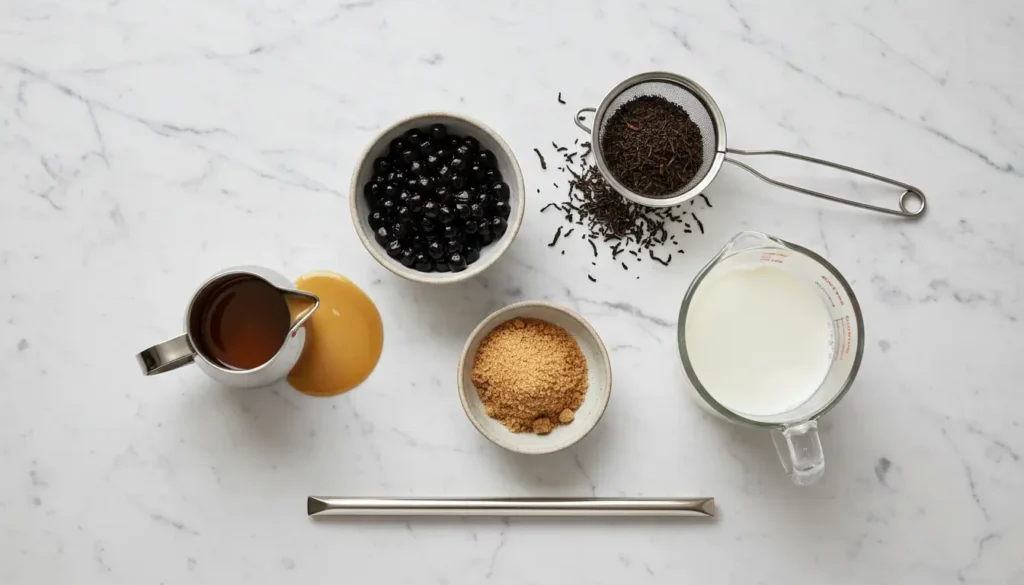
What Are Tapioca Pearls (Boba)?
The star of bubble tea is the “boba”—those dark, chewy balls at the bottom of the cup.
What they are: Boba pearls are made from tapioca starch (derived from cassava root), water, and brown sugar or caramel coloring. Raw, they look like small, fragile, dusty pellets.
The texture: When boiled, they transform into gummy, chewy spheres. The perfect texture is often described in Taiwan as “QQ”—meaning bouncy, rubbery, and pleasing to chew.
Types of boba:
- Quick-cook boba: Ready in 5 minutes (convenient but texture hardens quickly).
- Traditional raw boba: Takes 30+ minutes to cook (superior texture and flavor). We recommend this type for the best results.
- Popping boba: Juice-filled spheres that burst (different from traditional tapioca).
For this recipe, we focus on traditional dried black tapioca pearls, which absorb the brown sugar syrup and stay chewy longer.
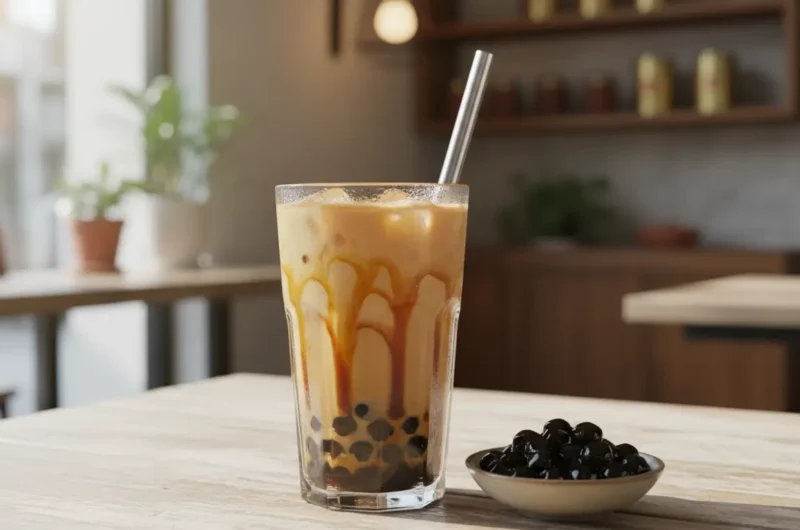
How to Make Boba Tea Recipe (Bubble Tea) – Better Than Cafe Quality
Course: DrinksCuisine: TaiwaneseDifficulty: Easy2
tall glasses10
minutes40
minutes350
kcal50
minutesThis authentic how to make boba tea recipe gives you perfectly cooked, chewy brown sugar pearls suspended in creamy black milk tea.
Ingredients
For the Boba Pearls:
½ cup dried black tapioca pearls (not quick-cook)
4 cups water (for boiling)
¼ cup brown sugar (dark brown or muscovado is best)
¼ cup hot water (for soaking syrup)
For the Milk Tea Base:
2 cups water
4 bags black tea (Assam, Ceylon, or Earl Grey)
2 tablespoons sweetened condensed milk (or sugar/honey to taste)
1 cup whole milk (or oat milk for dairy-free)
Ice cubes
Directions
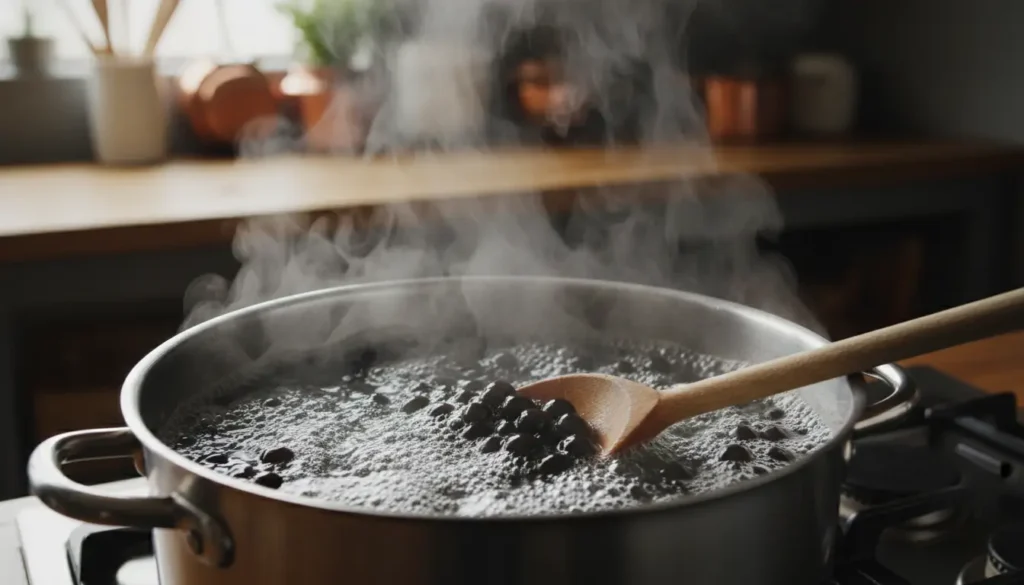
- Boil the water. Bring 4 cups of water to a rolling boil in a medium pot. Crucial: Do not add pearls until the water is boiling vigorously, or they will dissolve into powder.
- Cook the pearls. Add the tapioca pearls and stir gently until they float to the top. Reduce heat to medium (keep a simmer), cover the pot, and cook for 30 minutes.
- Rest the pearls. Turn off the heat. Keep the pot covered and let the pearls sit in the hot water for another 20–30 minutes. This resting period ensures the center cooks through perfectly without the outside getting mushy.
- Prepare the sugar syrup. While pearls rest, dissolve ¼ cup brown sugar in ¼ cup hot water in a small bowl to create a thick syrup.
- Brew the tea. While waiting, boil 2 cups of water and steep the 4 tea bags for 5–10 minutes to make a very strong concentrate. Remove bags and stir in sweetened condensed milk while warm. Let cool.
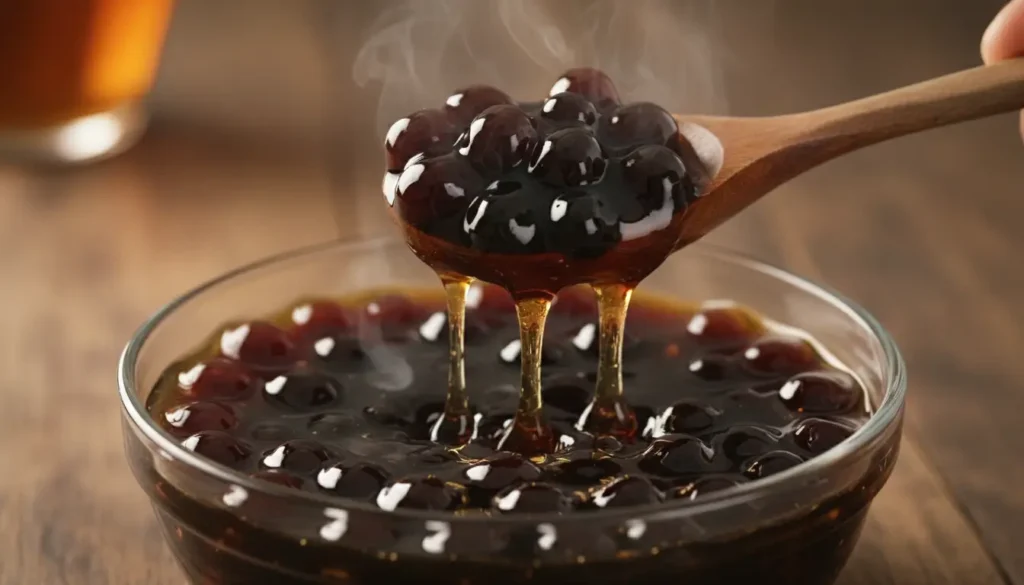
- Rinse and soak. Drain the pearls and rinse them briefly under cold water to stop the cooking and wash off excess starch. Transfer them immediately into the brown sugar syrup mixture. Let them soak for at least 10 minutes to absorb the sweetness.
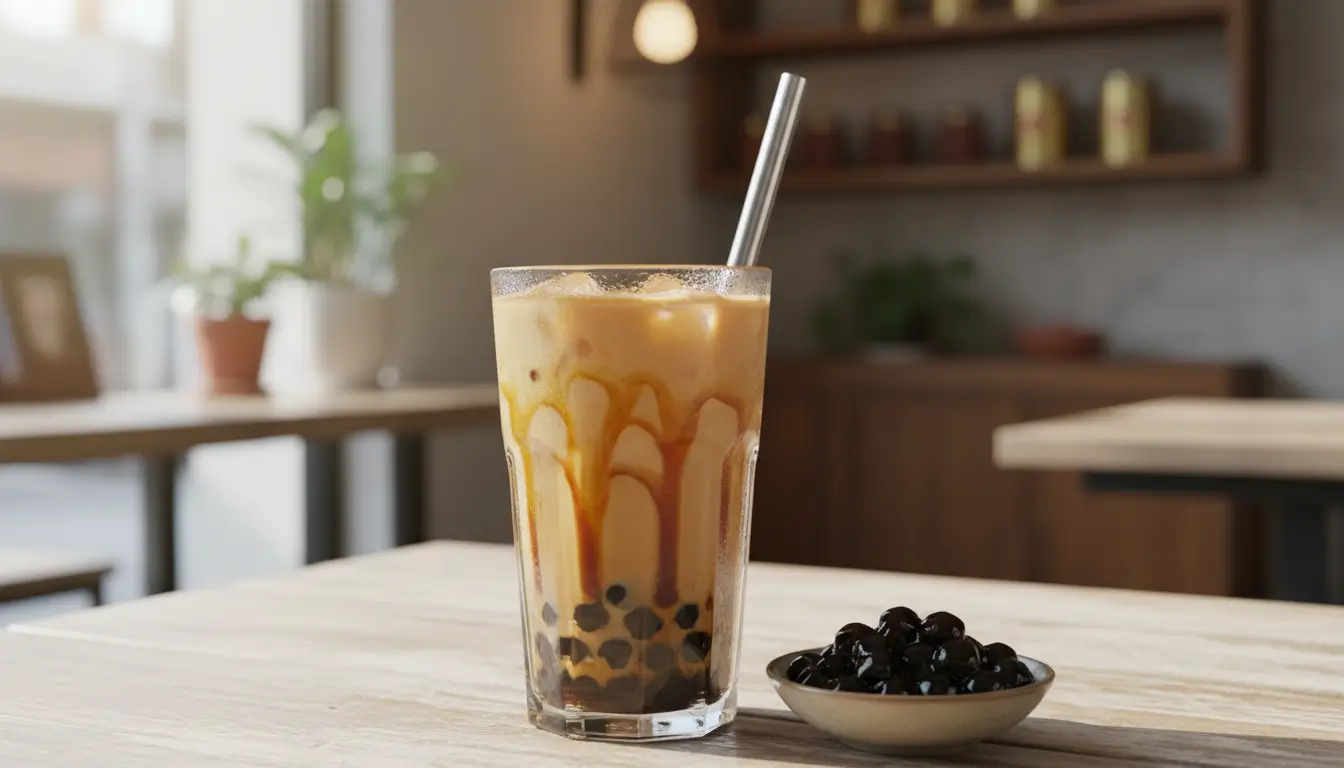
- Assemble the drink. Spoon generous amounts of boba pearls (with some syrup) into the bottom of two tall glasses. Tilt the glass to coat the sides with syrup for that “tiger stripe” look. Add ice cubes.
- Pour and serve. Pour the cooled tea over the ice, then top with milk. Stick in a wide boba straw, stir, and enjoy immediately!
Notes
- Best tea types: Assam and Ceylon black teas have the bold flavor needed to stand up to milk. Jasmine green tea is excellent for fruit teas.
- Milk options: Whole milk or half-and-half creates the richest flavor. For vegan boba, oat milk is the creamiest alternative; almond milk is thinner.
- Storage: Cooked boba cannot be refrigerated—they will harden and become inedible. Consume within 4 hours. Keep them in the syrup at room temperature.
- Quick-cook pearls: If using 5-minute boba, follow package instructions, but note that the texture won’t be as good as the slow-cook method.
- Sweetness adjustment: The brown sugar syrup makes the pearls sweet. Taste your tea before adding extra sugar.
Nutrition Information (per serving)
- Calories: 350 kcal
- Protein: 4g
- Fat: 6g
- Carbohydrates: 70g
- Sugar: 45g
- Sodium: 45mg
Expert Tips for the Best Boba Tea
Mastering how to make boba tea comes down to managing the pearls’ texture.
1. The “Rolling Boil” Rule
Never add tapioca pearls to cold or lukewarm water. They are made of starch and will disintegrate instantly. The water must be at a violent boil to seal the outside immediately.
2. The Ice Bath Shock
After cooking, rinsing the pearls in cold water shrinks the surface starch slightly, giving them that signature “QQ” bounce. Don’t skip this step, or your pearls will be gummy instead of chewy.
3. Make Strong Tea
Because you are diluting the tea with milk and ice, normal tea strength will taste watery. Brew it at double strength (2 bags per cup) for that robust tea flavor found in shops.
4. Warm Pearls, Cold Drink
For the best experience, keep the pearls slightly warm in the syrup until the moment you serve. When the warm pearls hit the cold milk and ice, they stay soft while the drink stays refreshing.
5. Tiger Sugar Effect
To get those Instagram-worthy streaks of syrup down the sides of the glass, thicken your brown sugar syrup slightly by simmering it for 2 minutes. Tilt the glass while spooning it in so it clings to the walls.
Creative Boba Flavors to Try
Once you know how to make boba tea base, you can experiment endlessly.
Brown Sugar Milk (No Tea)
Skip the tea entirely. Layer warm brown sugar boba, ice, and fresh cold milk. This caffeine-free version is famous (like “Tiger Sugar” style).
Matcha Boba Latte
Whisk 1 teaspoon matcha powder with warm water and sugar. Pour over milk and ice, then add your pearls.
Taro Milk Tea
Use taro powder or cook fresh taro root with sugar and milk, then blend for a purple, nutty, vanilla-like treat.
Strawberry Matcha
Layer strawberry purée (muddled strawberries + sugar) at the bottom, add milk and ice, then top with matcha tea. Add boba for texture.
Coffee Jelly or Boba
Add a shot of espresso to your milk tea for a “Yuan Yang” (Hong Kong style coffee-tea mix) with boba.
Perfect Pairings for Boba Tea
Bubble tea is a snack in itself, but it pairs beautifully with Asian street food.
Popcorn Chicken — Taiwanese salt and pepper chicken is the classic partner for boba.
Gorditas — Serve your boba alongside our gorditas recipe for a fun fusion snack meal.
Corn Nuts — The salty crunch of our homemade corn nuts balances the sweet creamy tea perfectly.
Spicy Noodles — The cooling milk tea helps soothe the heat from spicy ramen or Dan Dan noodles.
Frequently Asked Questions
Can I save leftover boba pearls?
No. Once cooked, tapioca starch hardens when cold (retrogradation). If you put them in the fridge, they become rock-hard. Cook only what you can eat within 4 hours.
Why are my pearls falling apart?
You added them before the water was boiling, or you stirred too vigorously at the beginning. Be gentle and ensure the water is boiling hard.
Why are my pearls hard in the middle?
They weren’t cooked long enough. The 30-minute boil + 20-minute rest method is essential to hydrate the center. Don’t rush it.
Can I make healthy boba tea?
Yes! Control the sugar (use honey or stevia), use skim milk or almond milk, and use fewer pearls (which are pure carbs). You can also use chia seeds as a textural substitute.
Is boba tea gluten-free?
Tapioca pearls are naturally gluten-free (made from cassava root). Just check that your brown sugar or flavorings don’t contain additives.
What kind of straw do I need?
You need a wide “boba straw” (usually 12mm diameter). Standard straws are too narrow for the pearls to pass through.
Where is boba tea from?
Boba tea (also known as bubble tea or pearl milk tea) originated in Taiwan in the 1980s. It started as a way to make traditional tea more exciting by adding milk and chewy tapioca pearls (“boba”). It quickly spread throughout Asia and then globally, becoming a cultural phenomenon.
Does boba tea have caffeine?
Yes, most boba tea contains caffeine. The classic version is made with a black tea or green tea base, which naturally has caffeine (about 40-50mg per cup). However, you can make caffeine-free versions by using herbal teas, fruit juices, or just “brown sugar milk” (milk + syrup + pearls) without any tea at all.
How many calories in boba tea?
A standard 16oz (500ml) milk tea with tapioca pearls typically contains 300-450 calories. The majority of these calories come from the tapioca pearls (which are pure starch) and the added sugar or syrup. You can reduce the calories by asking for less sugar (0% or 30%) or using fewer pearls.
Is boba tea gluten-free?
Yes, traditional boba tea is naturally gluten-free. The tapioca pearls are made from cassava root (a starchy tuber), not wheat. However, always check specific toppings like pudding or jellies, and ensure no cross-contamination if buying from a shop.
What are the balls in boba tea?
The chewy balls are called tapioca pearls (or just “boba”). They are made from tapioca starch extracted from the cassava root, mixed with water and brown sugar or caramel coloring to give them their dark color. When cooked, they become gummy and chewy with a texture often described as “QQ” (bouncy).
Is boba tea vegetarian?
Yes, boba tea is generally vegetarian. The pearls themselves are vegan (starch + sugar). The “milk tea” part usually contains cow’s milk, but can easily be made vegan by substituting oat milk, almond milk, or soy milk. Be careful with toppings like “pudding” or “foam,” which often contain dairy or gelati
The Science of “QQ” Texture
Why do we boil AND rest the pearls?
Gelatinization — Boiling heat penetrates the outer layer of the starch ball, turning it translucent and gummy.
Hydration — The resting period allows the heat and moisture to slowly penetrate the dry white center without overcooking the outside. If you just boiled them for 50 minutes, the outside would dissolve before the inside was done.
Retrogradation — Starch molecules recrystallize when cold. This is why boba gets hard in the fridge. Keeping them in warm syrup prevents this retrogradation for a few hours.
To understand more about the fascinating chemistry of starches and how retrogradation affects the texture of foods like tapioca pearls, bread, and rice, this guide on starch retrogradation explains the science behind why cooked starches harden when cooled.
Be Your Own Bobarista
Now you know how to make boba tea recipe that rivals the best shops in Taiwan.
There is something incredibly satisfying about watching the dark pearls dance in the boiling water and assembling your perfect cup. It’s a customizable luxury you can enjoy anytime, for a fraction of the price. Whether you like it milky, fruity, icy, or hot, the power is in your hands.
So boil that water, steep that tea, and get ready to chew. Your homemade bubble tea shop is officially open.
Made this recipe? Rate it below and tell me your favorite boba flavor combo!