


If you’ve been looking for a bread recipe that’s simple enough for beginners but impressive enough for any occasion, this sourdough focaccia recipe is exactly what you need.
No kneading, no shaping, no Dutch oven, no stress. Just mix your dough, let it rest overnight, press it into a pan, dimple the top with your fingers, drizzle generously with olive oil, and bake until golden, crispy, and irresistible.
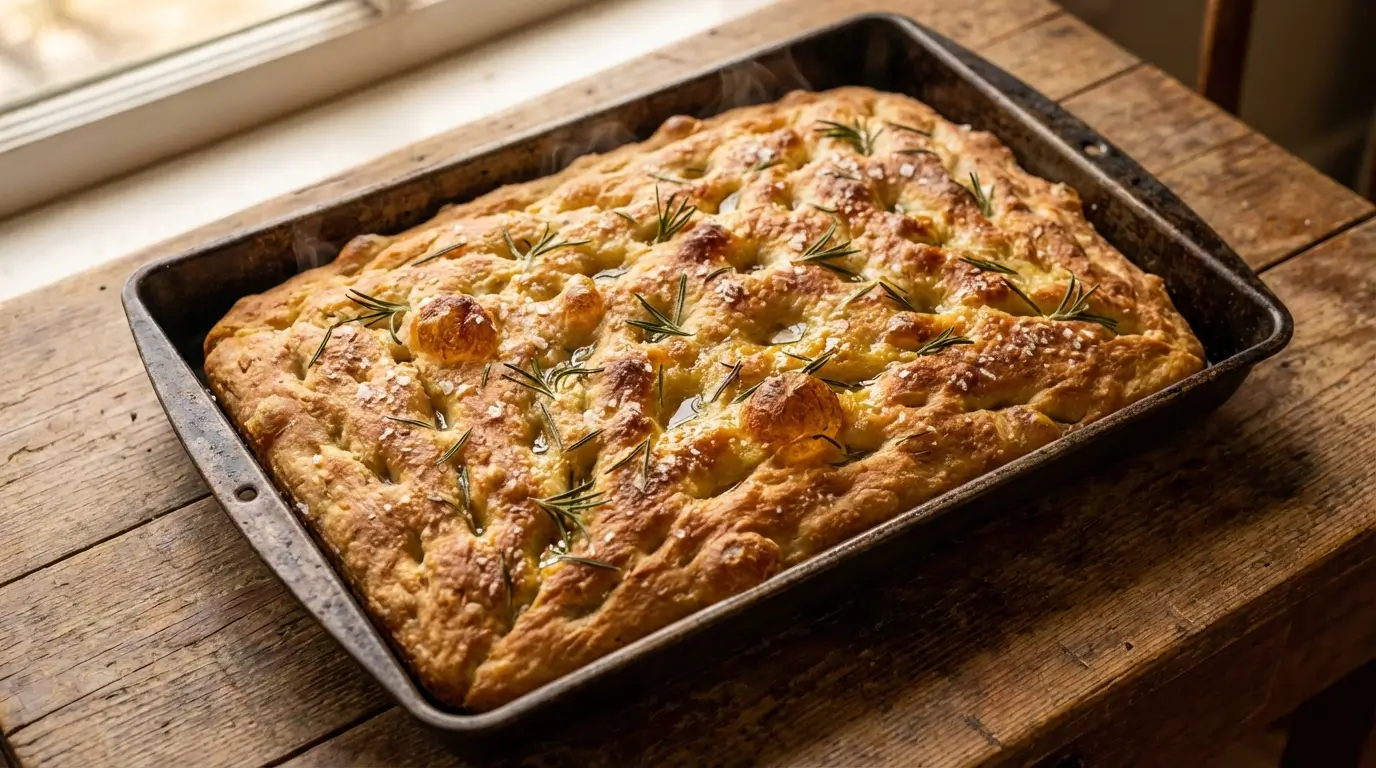
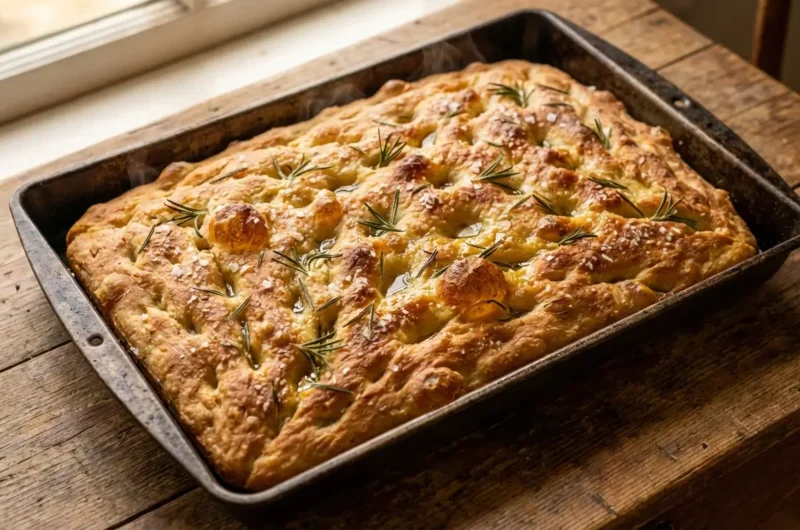
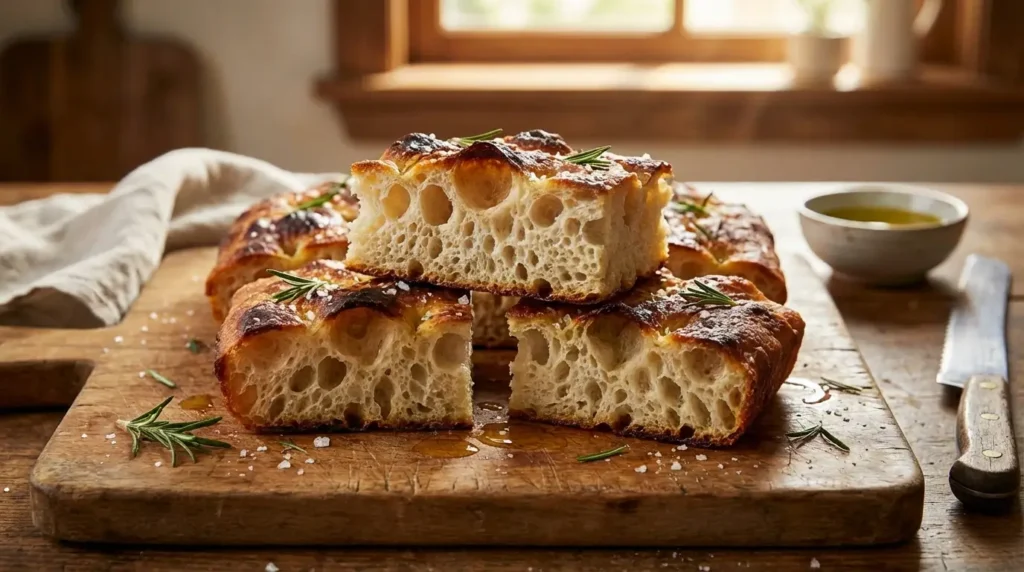
The result is focaccia with a shatteringly crispy bottom and edges, a soft and airy open crumb full of bubbles, and that deep, tangy sourdough flavor that yeast-only bread simply cannot match. The olive oil soaks into every dimple and crevice, creating a rich, golden crust that you’ll want to tear into the moment it comes out of the oven.
Whether you serve it as a side, use it as sandwich bread, cut it into squares for a party, or top it like a pizza, this sourdough focaccia never disappoints.
Ready to bake the best bread of your life? Let’s go.
Table of Contents
Why You’ll Love This Sourdough Focaccia Recipe
No kneading required. Mix everything in one bowl, cover, and let time do the work.
Deep sourdough flavor. The long, slow fermentation develops a complex, tangy flavor that instant yeast bread can never match.
Incredible texture. Crispy golden crust on the outside, soft and airy with big bubbles on the inside.
Beginner-friendly. If you have an active sourdough starter and a baking pan, you can make this.
Endlessly customizable. Top it with rosemary and sea salt, olives, cherry tomatoes, caramelized onions — anything goes.
Make-ahead friendly. Mix the dough the night before and bake fresh the next morning.
What You Need Before You Start
Before making this recipe, you need one thing: an active, bubbly sourdough starter.
Your starter is ready to use when it has been fed 6–10 hours before baking, has doubled in size, is full of bubbles, and passes the float test — drop a small spoonful into water and if it floats, it’s ready.
If your starter is not active, feed it and wait until it peaks before using it in this recipe. Using a weak or unfed starter will result in flat, dense focaccia that doesn’t rise properly.
Keeping a healthy, active sourdough starter is the foundation of every great sourdough recipe. Alexandra Cooks’ beginner’s guide to sourdough focaccia walks you through exactly how to know when your starter is ready and how to get the best rise every single time.
Sourdough Focaccia Recipe
Sourdough Focaccia Recipe – Crispy, Airy & No Knead
Course: Bread, SidesCuisine: Italian, AmericanDifficulty: Easy12
pieces15
minutes30
minutes220
kcal16
minutes16
hours27
minutesThis easy no-knead sourdough focaccia recipe uses an active sourdough starter for incredible tangy flavor, a long overnight rest for an airy open crumb, and generous olive oil for a perfectly crispy golden crust. Mix it tonight, bake it tomorrow — the best bread you’ll ever make!
Ingredients
For the Dough:
500g (4 cups) bread flour or all-purpose flour
375g (1⅔ cups) lukewarm water
125g (½ cup) active sourdough starter (100% hydration, fed and bubbly)
10g (1¾ tsp) fine sea salt
1 tablespoon honey or sugar
2 tablespoons olive oil (for the dough)
For the Pan and Topping:
4–5 tablespoons good quality extra virgin olive oil (for the pan and drizzling)
1 teaspoon flaky sea salt
2 tablespoons fresh rosemary leaves
Optional toppings: cherry tomatoes, sliced olives, caramelized onions, roasted garlic
Directions
- The Night Before (Mix the Dough):
- Mix the wet ingredients. In a large bowl, whisk together the lukewarm water, active sourdough starter, and honey until combined.
- Add the dry ingredients. Add the bread flour, salt, and 2 tablespoons of olive oil. Stir with a dough whisk or wooden spoon until no dry flour remains. The dough will be shaggy and sticky — this is exactly right. Do not add more flour.
- First rest. Cover the bowl tightly with plastic wrap or a damp kitchen towel. Let the dough rest at room temperature for 30 minutes.
- Stretch and fold. Wet your hand and grab one side of the dough, stretch it up as high as it will go, then fold it over the center. Rotate the bowl 90 degrees and repeat — do this 4 times total to complete one set. Cover and rest for 30 minutes. Repeat this stretch and fold process 3 more times (4 sets total, one every 30 minutes).
- Overnight bulk fermentation. After the final stretch and fold, cover the bowl tightly and leave at room temperature for 8–12 hours overnight. By morning the dough should be puffy, full of bubbles, and roughly doubled in size.
- The Next Day (Shape and Bake):
- Prepare the pan. Pour 3–4 tablespoons of olive oil into a 9×13 inch baking pan and spread it all over the bottom and up the sides.
- Transfer the dough. Gently scrape the dough from the bowl into the oiled pan. Do not punch it down or deflate it — handle it gently to preserve all those precious bubbles.
- Stretch to fit the pan. Gently stretch the dough toward the corners of the pan by folding it over itself gently and letting it relax. If it springs back, leave it for 10 minutes, then stretch again. It will eventually fill the pan.
- Final proof. Cover loosely and let the dough rest for 2–4 hours at room temperature until puffy, jiggly, and full of air bubbles.
- Preheat the oven. About 30 minutes before baking, preheat your oven to 425°F (220°C).
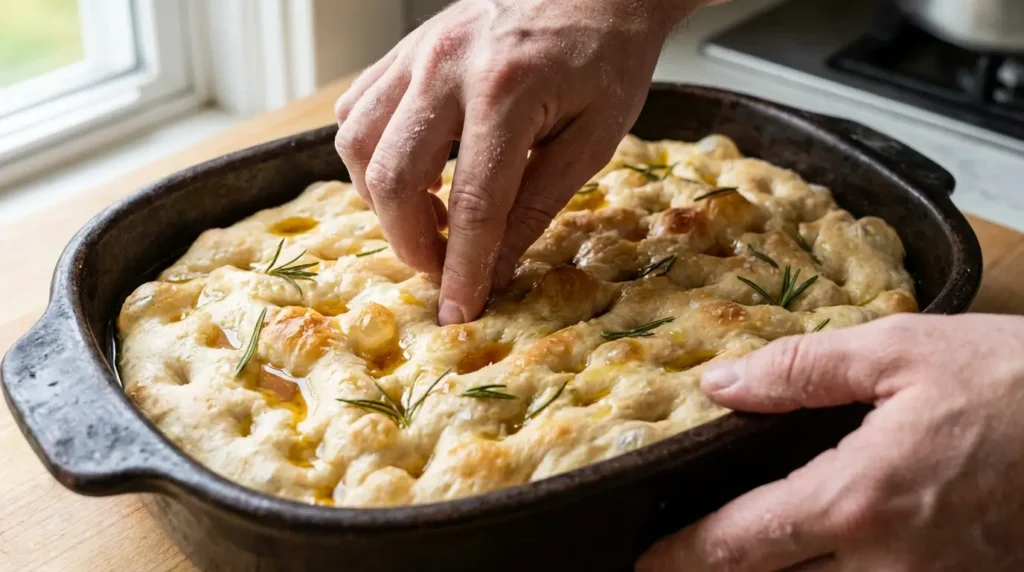
- Dimple the dough. Drizzle the remaining olive oil generously all over the top of the dough. Oil your fingers and press them firmly into the dough all over the surface to create the signature deep focaccia dimples. Don’t be shy — press all the way down to the bottom of the pan.
- Add toppings. Scatter the fresh rosemary and flaky sea salt over the top. Add any optional toppings now, pressing them gently into the dimples.
- Bake. Place in the preheated oven and bake for 25–30 minutes until the top is deep golden brown and the edges are crispy. The bottom should be golden and crisp — lift a corner with a spatula to check.
- Cool. Remove from the oven and immediately drizzle with a little extra olive oil if desired. Let the focaccia cool in the pan for 5 minutes, then transfer to a wire rack. Wait at least 15 minutes before slicing — the interior needs time to set.
Recipe Video
Notes
- Use bread flour for the best results. It has more protein than all-purpose flour, which creates a stronger gluten structure and gives you a chewier, more open crumb. All-purpose flour works but the texture will be slightly softer.
- Don’t skip the stretch and folds. They build the gluten structure that creates the airy, open crumb without any kneading.
- Be generous with the olive oil. This is focaccia — the olive oil is not optional. It creates the crispy crust and prevents sticking. Use good quality extra virgin olive oil for the best flavor.
- The dough should be sticky. Don’t add more flour. A high-hydration, sticky dough is what creates the open, airy crumb that makes focaccia so special.
- Adjust fermentation time to your kitchen temperature. Warmer kitchens ferment faster. If your kitchen is hot, reduce the overnight rest to 8 hours. If it’s cold, it may need the full 12 hours or slightly longer.
Nutrition Information (per piece, 1/12 of pan)
- Calories: 220 kcal
- Carbohydrates: 36g
- Protein: 6g
- Fat: 6g
- Fiber: 1g
- Sodium: 320mg
Expert Tips for Perfect Sourdough Focaccia
1. Start With an Active Starter
This is the foundation of the entire recipe. A sluggish or unfed starter produces flat, dense focaccia. Feed your starter 6–10 hours before mixing the dough and use it at its peak — when it’s domed, bubbly, and just starting to fall.
2. Use Warm Water, Not Hot
Water that’s too hot will damage your starter. Aim for lukewarm — about 75–80°F (24–27°C), which feels barely warm to the touch.
3. Don’t Rush the Fermentation
The long overnight fermentation is where all the flavor develops. Rushing it by cutting the time short will give you focaccia that tastes more like regular bread — good, but missing that signature sourdough depth.
4. Oil Everything Generously
The olive oil on the pan isn’t just to prevent sticking — it fries the bottom of the focaccia as it bakes, creating that addictive crispy, golden crust. Don’t be shy with it.
5. Press the Dimples Deep
Dimples are more than aesthetic — they hold pools of olive oil that baste the bread as it bakes. Press your fingers all the way down to the pan for deep, well-defined dimples.
6. Check the Bottom
The top can look golden while the bottom is still pale and soft. Lift a corner with a spatula before removing from the oven. The bottom should be deep golden and crispy.
Topping Ideas
The classic rosemary and sea salt is perfect, but focaccia is a blank canvas for endless creativity.
Savory Toppings:
- Cherry tomatoes and fresh basil
- Sliced black or green olives and thyme
- Caramelized onions and fresh rosemary
- Roasted garlic and sage
- Sliced red onion and za’atar
- Thin potato slices with rosemary and sea salt
For a Pizza-Style Focaccia:
- Brush with tomato sauce, add mozzarella and your favorite vegetables before baking
Finishing Touches:
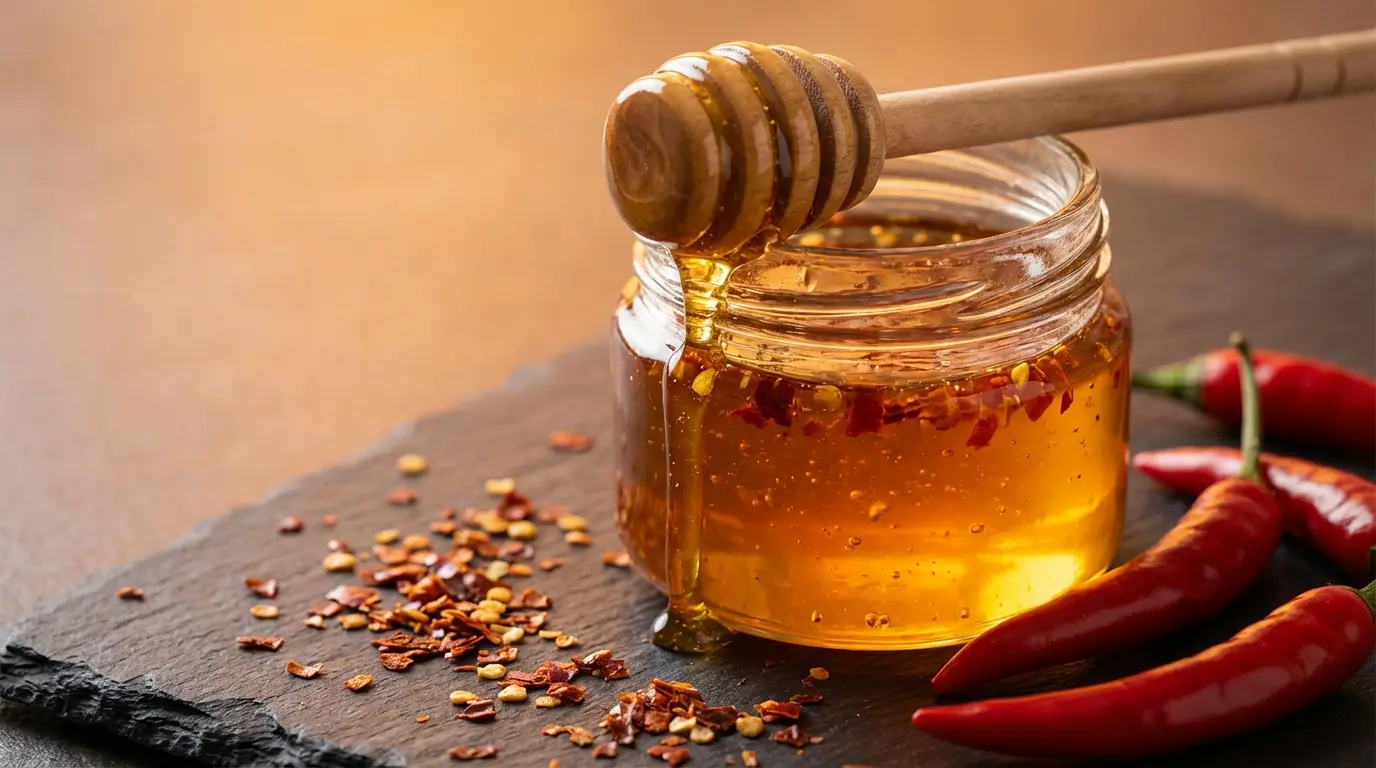
- Drizzle with our Hot Honey Recipe right after baking for a sweet and spicy twist
- Brush with garlic butter straight from the oven
Flavor Variations
Garlic Butter Sourdough Focaccia — After baking, brush the hot focaccia immediately with melted butter mixed with minced garlic, fresh parsley, and a pinch of salt. The butter soaks in as it cools for incredible flavor.
Za’atar and Olive Oil Focaccia — Replace the rosemary with 2 tablespoons of za’atar spice blend mixed with olive oil brushed generously over the top before baking. A Middle Eastern twist that’s absolutely stunning.
Cheese Focaccia — Press small cubes of halloumi or shredded mozzarella into the dimples before baking. The cheese melts, browns, and creates golden pockets throughout.
Sweet Focaccia — Reduce the salt in the dough and top with sliced fresh figs, a drizzle of honey, and a sprinkle of sesame seeds before baking.
How to Serve Sourdough Focaccia
As a side bread — Tear and serve alongside soups, salads, or dips.
As sandwich bread — Slice horizontally and fill with grilled vegetables, cheese, and fresh herbs.
As a party appetizer — Cut into small squares and serve alongside our Knorr Spinach Dip Recipe for the ultimate crowd-pleasing spread.
As a pizza base — Top with tomato sauce and cheese before baking for a thick, focaccia-style pizza.
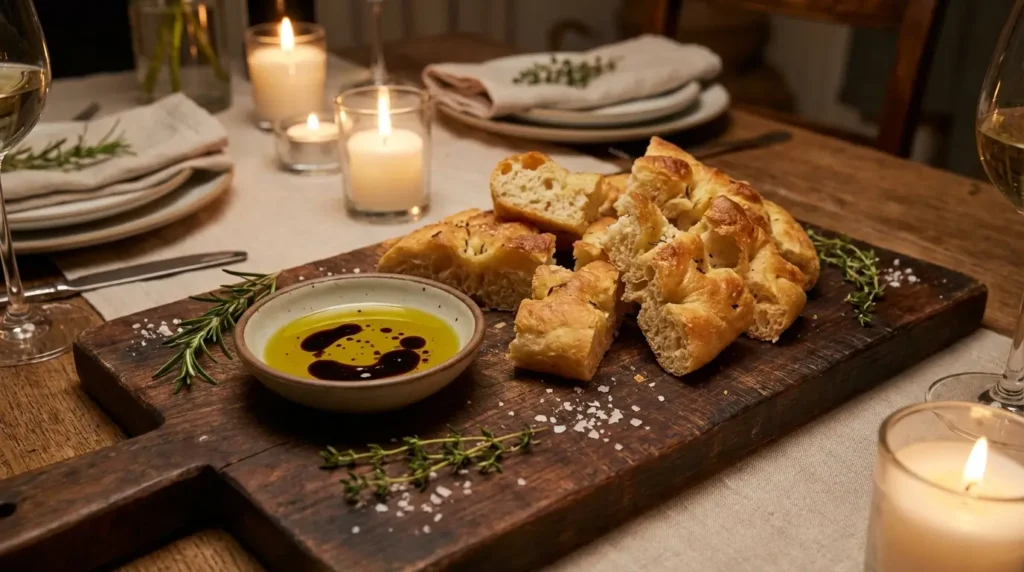
As a starter — Serve warm with a dish of extra virgin olive oil and balsamic vinegar for dipping.
Storage
Room temperature: Wrap in a clean kitchen towel or store in an airtight container for up to 2 days. Focaccia is best the day it’s baked.
Refrigerator: Up to 4 days. Reheat in a 350°F (175°C) oven for 5–8 minutes to restore the crispy crust.
Freezer: Slice and freeze in an airtight bag for up to 1 month. Reheat directly from frozen in a 375°F (190°C) oven for 10–12 minutes.
Frequently Asked Questions
Can I make this without a sourdough starter?
This recipe is specifically designed for sourdough starter. If you don’t have one, you can substitute with 1 teaspoon of instant yeast, but the deep sourdough flavor will not be present.
Why is my focaccia flat and dense?
The most common cause is an inactive or weak starter. Make sure your starter has been fed recently and is bubbly and active before using it.
Can I cold proof the dough instead of room temperature?
Yes! After mixing and completing the stretch and folds, cover the dough and refrigerate for up to 24 hours. Remove from the fridge, transfer to the oiled pan, and proceed with the final proof at room temperature (this will take 3–5 hours as the dough warms up).
Why is my dough so sticky?
This is completely normal! High-hydration focaccia dough is meant to be very sticky and wet. Don’t add more flour — this stickiness is what creates the airy, open crumb. Wet your hands before handling the dough to prevent sticking.
Can I make focaccia in a cast iron pan?
Yes! A well-seasoned cast iron skillet works beautifully and gives the crispiest bottom of all. Use a 10–12 inch skillet for a thicker focaccia.
What is the float test for sourdough starter?
Drop a small spoonful of your starter into a glass of water. If it floats, it’s active and ready to use. If it sinks, feed it again and wait until it’s more active.
The Most Satisfying Bread You’ll Ever Bake
This sourdough focaccia recipe is the bread that will make you fall in love with baking all over again.
That sound when you tear a warm piece — the crackle of the crust, the soft pull of the open crumb, the smell of olive oil and rosemary filling your kitchen — there is nothing quite like it.
It takes patience, not skill. Time, not technique. And the reward is a focaccia so good that your whole family will be asking for it every single week.
Mix it tonight. Bake it tomorrow. Thank yourself later.
Made this focaccia? Rate it below and tell me what toppings you used!