
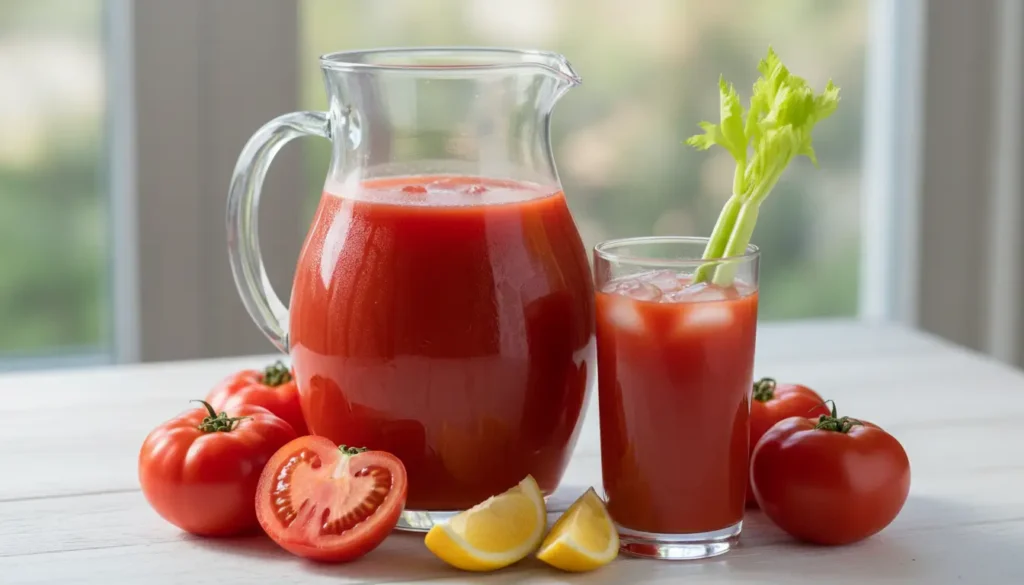

If you’ve only ever tasted tomato juice from a can, you’ve never really had tomato juice.
Store-bought versions are often loaded with sodium, preservatives, and a metallic aftertaste that masks the bright, sweet-tart flavor of real tomatoes. Learning how to make tomato juice recipe at home changes everything. It’s vibrant, refreshing, and tastes exactly like a ripe summer tomato in a glass.
Whether you have a garden overflowing with harvest or just picked up a crate of ripe tomatoes from the farmers market, making your own juice is one of the best ways to preserve that fresh flavor. It’s surprisingly simple—no fancy juicer required. A pot, a blender, and a strainer are all you need to transform fresh fruit into silky, savory juice.
This base recipe is a blank canvas. Drink it straight over ice, use it as a fresh base for Bloody Marys, stir it into soups and chili, or can it for winter pantry stocking. Once you taste the homemade version, you’ll never go back to the bottled stuff.
Ready to capture the essence of summer in a glass? Let’s make the freshest tomato juice you’ve ever tasted.
Table of Contents
Why You’ll Love This Homemade Tomato Juice
This isn’t just a drink—it’s a versatile kitchen staple that beats store-bought in every way.
Pure, fresh flavor. No metallic can taste, just sweet, tangy, garden-fresh tomato goodness.
Control the sodium. Most canned juices are salt bombs. You decide exactly how much salt goes in.
Zero waste. Perfect way to use up bruised, overripe, or “ugly” tomatoes that aren’t pretty enough for salads.
No fancy equipment. You don’t need a juicer—just a pot and a strainer work perfectly.
Rich in nutrients. Packed with lycopene, Vitamin C, and potassium without the additives.
Versatile base. Use it for drinking, cocktails (Bloody Marys/Micheladas), or as a cooking stock for soups and stews.
Customizable. Add celery, onions, peppers, or spices to create your own signature blend.
This how to make tomato juice recipe transforms simple produce into a gourmet beverage with minimal effort.
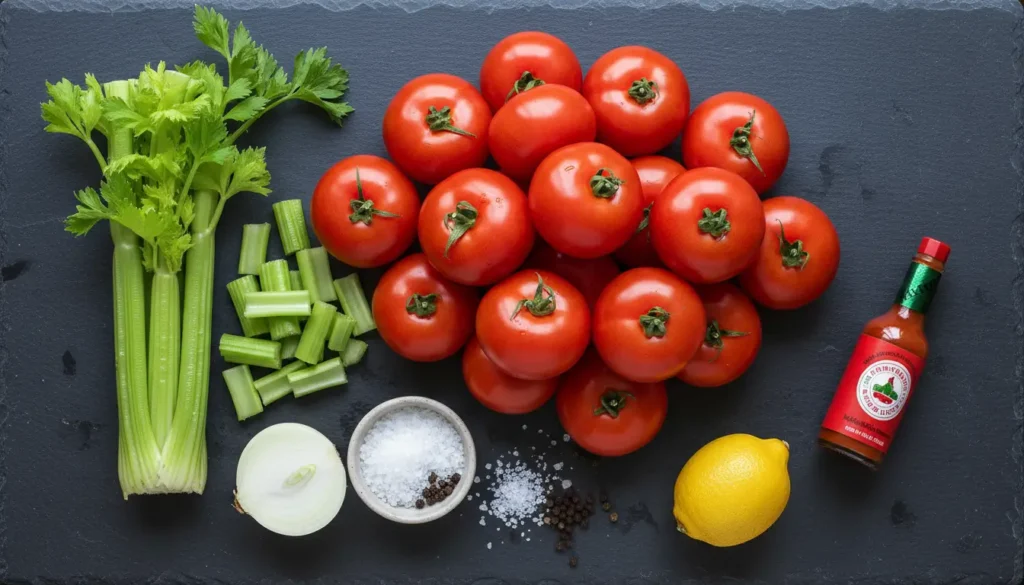
Best Tomatoes for Juicing
The quality of your juice depends entirely on your tomatoes.
Roma (Plum) Tomatoes: These are the gold standard for juicing and canning. They are meaty, have fewer seeds, and contain less water, resulting in a richer, thicker juice that doesn’t separate as easily.
Beefsteak/Slicing Tomatoes: These are juicier and sweeter but have a higher water content. They make a thinner, more refreshing juice perfect for drinking cold.
Heirlooms: These add incredible, complex flavors but can be expensive. Use them if you have a garden surplus for a truly gourmet juice.
The Golden Rule: Use the ripest tomatoes possible. Slightly overripe is fine; underripe is not. If the tomato isn’t delicious enough to eat raw with salt, it won’t make good juice.
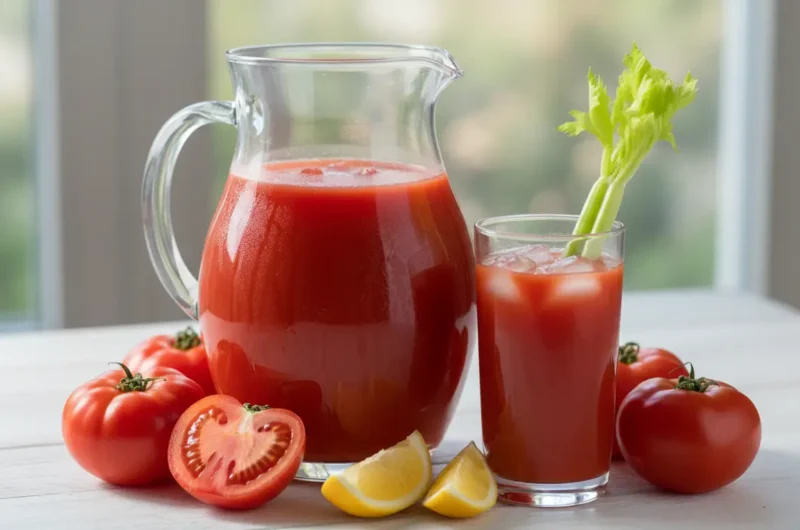
How to Make Tomato Juice Recipe (Fresh, Homemade, and Better Than Bottled)
Course: Drinks, HealthyCuisine: AmericanDifficulty: Easy4
Cups15
minutes25
minutes45
kcal40
minutesThis authentic how to make tomato juice recipe uses the stovetop method to extract maximum flavor and lycopene. Smooth, savory, and perfectly seasoned.
Ingredients
3 lbs ripe tomatoes (about 8-10 medium), washed and cored
1 cup chopped celery (with leaves for flavor)
½ cup chopped sweet onion
1 teaspoon sugar (optional, to balance acidity)
1 teaspoon salt (adjust to taste)
¼ teaspoon black pepper
Splash of Tabasco or Worcestershire sauce (optional)
Fresh lemon juice (to taste)
Directions
- Prep the vegetables. Wash tomatoes thoroughly. Remove the cores and chop them roughly into quarters. Chop the celery and onion. You don’t need to peel the tomatoes yet.
- Simmer the mixture. Place chopped tomatoes, celery, onion, sugar, salt, and pepper in a large stainless steel pot (avoid aluminum, which reacts with acid). Bring to a simmer over medium heat.
- Cook down. Reduce heat to low, cover, and simmer gently for 20-25 minutes until the vegetables are completely soft and soupy. The tomatoes should break down and release their juices.
- Blend. Remove from heat. Use an immersion blender to purée the mixture directly in the pot until smooth. Alternatively, transfer carefully to a stand blender (in batches) and blend. Caution: Hot liquids expand in blenders; remove the center cap and cover with a towel.
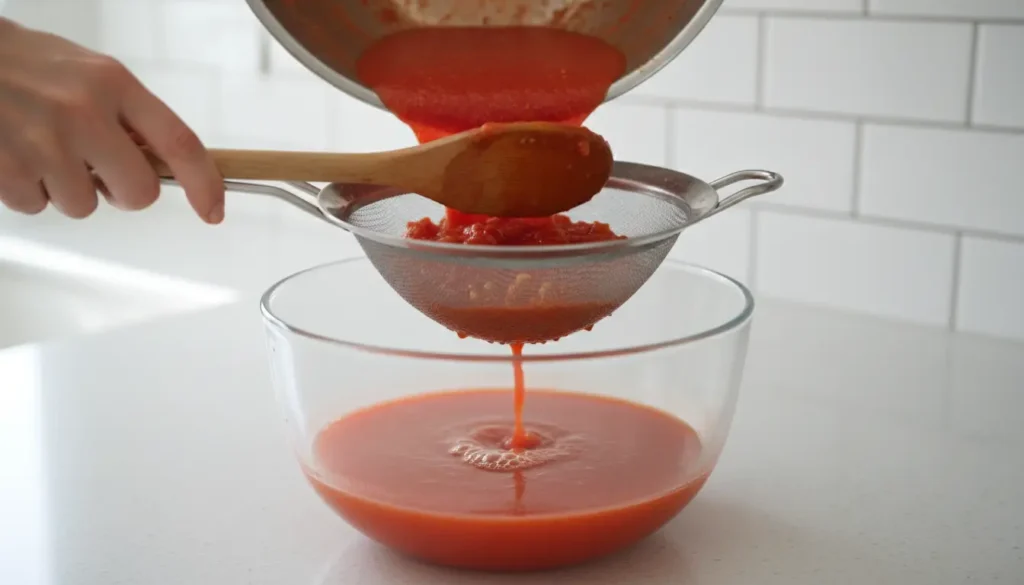
- Strain. Place a fine-mesh sieve or food mill over a large bowl or pitcher. Pour the purée through, using a ladle or spatula to press the solids against the mesh to extract all the liquid. Discard the dry skins and seeds left behind.
- Chill and season. Stir in lemon juice and hot sauce/Worcestershire if using. Taste and adjust salt. Let cool completely, then refrigerate for at least 2 hours before serving. It tastes best ice-cold.
Recipe Video
Notes
- Separation is natural: Homemade tomato juice separates because it lacks artificial stabilizers. Just shake well before pouring.
- For thicker juice: Cook the mixture uncovered in step 3 to evaporate excess water, or blend in a bit more of the pulp when straining.
- Canning safety: If canning for long-term storage, you MUST add bottled lemon juice (2 tbsp per quart) or citric acid to ensure safe acidity levels.
- Sweetness check: Taste your tomatoes first. If they are very tart, increase sugar slightly. If sweet, skip it.
- Pulp lover? Use a food mill with a larger disc to keep more texture in your juice.
Nutrition Information (per 1 cup serving)
- Calories: 45 kcal
- Protein: 2g
- Fat: 0g
- Carbohydrates: 10g
- Fiber: 2g
- Sodium: 300mg (variable)
Expert Tips for Perfect Tomato Juice
Mastering how to make tomato juice recipe is easy with these pro tips.
1. Don’t Skip the Celery
Even if you don’t like eating celery stalks, don’t skip it here. Celery provides a savory, aromatic backbone that makes the juice taste like “tomato juice” rather than just puréed salsa. The leaves contain the most flavor—use them!
2. Avoid Aluminum Pots
Tomatoes are highly acidic. Cooking them in aluminum cookware can cause a reaction that gives your juice a bitter, metallic taste and can even pit your pot. Stick to stainless steel, enamel, or glass.
3. The “Hot Break” Method
This recipe uses the “hot break” method (heating tomatoes before separating juice). This deactivates enzymes that cause separation and preserves pectin, resulting in a smoother, more cohesive juice with better body than cold-pressed raw juice.
4. Adjust Consistency
If your juice is too thin (watery tomatoes), return the strained juice to the pot and simmer uncovered for 10-15 minutes to reduce and concentrate the flavor.
5. Season After Cooling
Flavors change as the juice cools. Season lightly while hot, but do your final taste test and adjustment after the juice is fully chilled. You’ll get a more accurate sense of the balance.
Flavor Variations to Try
Once you have your base juice, you can customize it endlessly.
Spicy Kick
Add 1 diced jalapeño (seeds removed) to the pot while simmering. Finish with a dash of cayenne pepper.
Bloody Mary Ready
Stir in 1 tablespoon prepared horseradish, 1 teaspoon Worcestershire sauce, and ½ teaspoon celery salt. Perfect for brunch cocktails.
Roasted Tomato Juice
Roast the quartered tomatoes, onions, and garlic on a sheet pan at 400°F for 30 minutes before simmering. This adds a deep, smoky sweetness to the final juice.
Garden Herb
Add fresh basil, parsley, and oregano sprigs to the pot during the last 5 minutes of simmering, then remove or blend them in for a herbaceous twist.
V8 Style Blend
Add 2 carrots, ½ beet, and a handful of spinach to the pot with the tomatoes. The beet gives it that deep red color and earthy sweetness.
Creative Ways to Use Tomato Juice
Don’t just drink it—cook with it!
Mexican Rice — Use tomato juice instead of water to cook rice for rich color and flavor.
Chili Base — Substitute half the broth in your favorite chili recipe with tomato juice for extra body.
Soup Starter — It’s the perfect instant base for gazpacho or vegetable beef soup.
Meat Marinade — The acidity tenderizes meat. Mix with herbs and marinate steak or chicken.
Braising Liquid — Braise cabbage or pot roast in tomato juice for savory sweetness.
For a complete meal, serve a chilled glass alongside our oven-baked ribs to cut the richness, or use it as a base for a soup to pair with our gorditas recipe.
Storage and Shelf Life
Because this is fresh juice without preservatives, it behaves differently than the bottled kind.
Refrigerator
Store in a clean glass jar or pitcher with a tight lid. It stays fresh for 5-7 days. Shake well before serving as separation will occur.
Freezer
Tomato juice freezes beautifully. Pour into freezer-safe containers (leave 1 inch of headspace for expansion) and freeze for up to 6 months. Thaw in the fridge overnight. The texture might change slightly, so give it a quick blend after thawing.
Canning
If you want to store it in the pantry, you must follow safe canning procedures using a water bath canner. Add 2 tablespoons of bottled lemon juice per quart jar to ensure acidity prevents botulism. Process pint jars for 35 minutes and quart jars for 40 minutes in boiling water.

Frequently Asked Questions
Can I use a juicer instead?
Yes, if you have a juicer, you can run raw tomatoes through it. However, the resulting juice will be thinner, separate faster, and have a more “raw” flavor. The cooked method yields a smoother, richer, traditional tomato juice texture.
Do I need to peel the tomatoes?
No. Since you are straining the mixture through a fine-mesh sieve or food mill at the end, the skins will be removed then. Cooking with the skins on actually adds more color and flavor to the juice.
Why is my tomato juice separating?
Natural tomato juice separates into clear liquid and red pulp because it lacks commercial stabilizers. This is a sign of natural quality! Just shake it before pouring. Cooking the tomatoes (hot break) helps minimize this compared to raw juicing.
Can I make this with canned tomatoes?
In a pinch, yes. Simmer 2 large cans of whole peeled tomatoes with the celery and onion, then blend and strain. It won’t be as fresh as garden tomatoes but works for cooking.
Is tomato juice healthy?
Extremely. It’s lower in sugar than fruit juices and packed with lycopene (an antioxidant linked to heart health), Vitamin C, and potassium. Homemade is healthier because you control the salt.
What can I do with the leftover pulp?
Don’t throw it away! The leftover skin/seed pulp adds fiber and flavor to compost, or you can dehydrate it and grind it into tomato powder for seasoning popcorn and chips.
The Science of Lycopene
Why cook the tomatoes instead of just juicing them raw?
Lycopene bioavailability — Lycopene is the powerful antioxidant that gives tomatoes their red color. Research shows that cooking tomatoes breaks down cell walls and actually increases the amount of lycopene your body can absorb.
This phenomenon is unique to tomatoes; while cooking destroys Vitamin C in many vegetables, it significantly boosts the bioavailability of lycopene. For a more detailed breakdown of the nutritional benefits of tomatoes and how processing affects them, Healthline’s overview of tomatoes and tomato juice provides an excellent evidence-based analysis.
Flavor development — Heating tomatoes triggers chemical reactions that develop savory glutamate (umami) flavors and reduce raw “green” notes.
Enzyme deactivation — Raw tomatoes contain enzymes (pectinase) that break down pectin. By heating them quickly, you deactivate these enzymes, preserving the natural pectin which gives the juice a thicker, velvety body rather than a watery one.
So not only does the stovetop method taste better, it’s actually better for you!
Taste the Summer All Year Long
Now you know how to make tomato juice recipe that captures the essence of fresh tomatoes.
It’s a simple process with a big payoff. A glass of ice-cold homemade tomato juice is savory, satisfying, and completely refreshing. Whether you’re drinking it for breakfast, mixing a cocktail, or cooking a Sunday dinner, this pantry staple is worth making from scratch.
So grab those ripe tomatoes, get your biggest pot, and start simmering. You’ll be amazed at how much flavor you can fit in a glass.
Made this recipe? Rate it below and let me know if you drank it straight or made a Bloody Mary!