

If you want the most refreshing, vibrant, and deeply flavourful cold soup you have ever tasted — one that comes together in just 15 minutes in a blender with zero cooking required — this gazpacho recipe is the only one you will ever need. According to Gimme Some Oven, the secret to truly outstanding gazpacho is using the ripest, most flavourful summer tomatoes you can find and giving the blended soup enough time to chill and develop its full depth of flavour before serving.
Table of Contents
What Is Gazpacho & Why You’ll Love It
Gazpacho is a classic chilled Spanish soup originating from the Andalusia region of southern Spain — made by blending raw ripe tomatoes with cucumber, red pepper, garlic, olive oil, and vinegar into a silky, vibrantly coloured cold soup that is served straight from the refrigerator. It is one of the most iconic dishes in Spanish cuisine and one of the greatest no-cook recipes in the world — entirely raw, entirely fresh, and entirely electric with bright summer flavour.
According to Spanish Sabores, authentic Andalusian gazpacho — Gazpacho Andaluz — relies on just six core ingredients: ripe tomatoes, cucumber, red pepper, garlic, extra virgin olive oil, and sherry vinegar. The quality of these ingredients is everything — a great gazpacho made with peak-season tomatoes is one of the most flavourful things you can put in a bowl; a gazpacho made with pale, watery, out-of-season tomatoes is flat, thin, and deeply disappointing regardless of technique.
What makes homemade gazpacho so special is that the blending and chilling process creates a soup that is simultaneously light and intensely satisfying — cool, silky, acidic, sweet, and savoury all at once. It is the perfect summer soup — naturally vegan, naturally gluten-free, packed with vitamins, incredibly low in calories, and genuinely one of the easiest recipes you will ever make. Much like our Pico de Gallo Recipe, it gets better the longer it sits as the flavours deepen and meld.
Key Benefits:
- Ready in just 15 minutes — blend, season, chill, done
- Absolutely zero cooking required — entirely raw, entirely fresh
- Naturally vegan and gluten-free — no animal products, no gluten whatsoever
- Incredibly low calorie — one of the lightest, most nutritious soups you can make
- Make-ahead friendly — tastes dramatically better after chilling overnight
- Infinitely customisable — classic tomato, watermelon, green, or white almond versions
- Perfect for summer entertaining — elegant, impressive, and completely effortless
🍳 Equipment You’ll Need (3 Items)
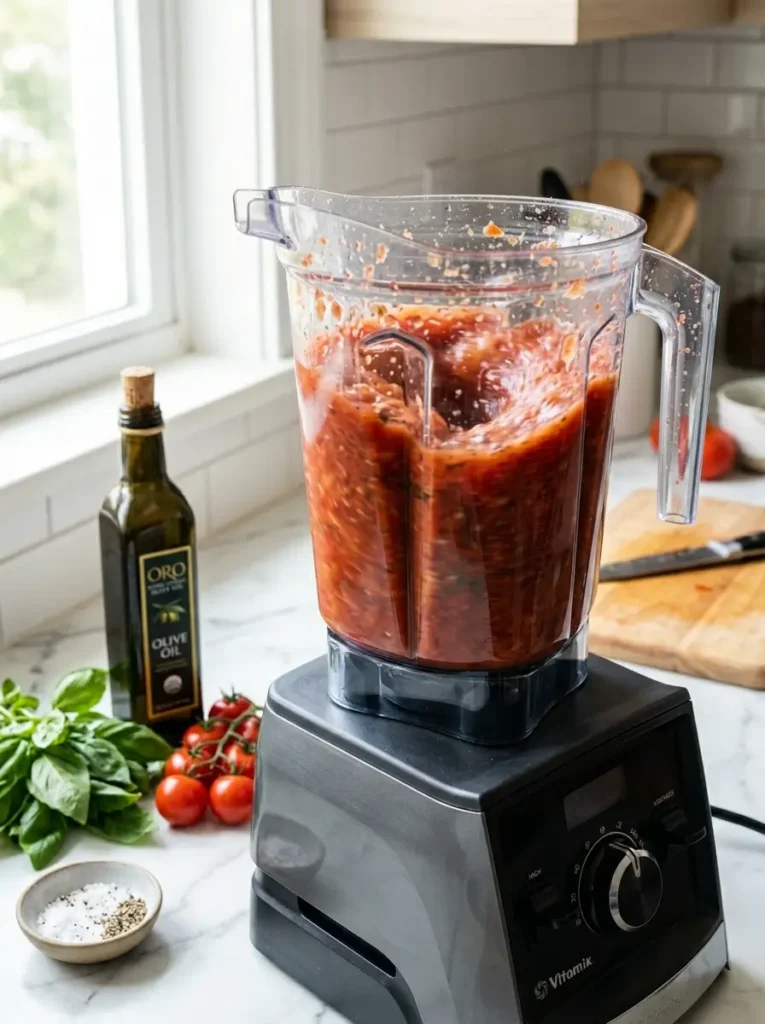
- High-powered blender (a high-powered blender like a Vitamix or Blendtec produces the silkiest, most refined gazpacho — a regular blender works well but may require blending in batches and a longer blending time)
- Fine mesh strainer (optional but recommended for an ultra-smooth, restaurant-quality result — press the blended soup through a strainer to remove all skin and seed fragments)
- Large glass bowl or airtight container (for chilling the finished gazpacho in the refrigerator — always use glass or ceramic, never metal which reacts with the acid in the tomatoes and vinegar)
How to Make Gazpacho Recipe (Best Authentic Gazpacho 2026)
Course: SoupsCuisine: Spanish, MediterraneanDifficulty: easy6
servings15
minutes10
minutes120
kcal1
hour10
minutesThe most refreshing, vibrant, and deeply flavourful chilled Spanish soup you will ever make — ready in just 15 minutes with zero cooking required. Six simple raw ingredients blended into a silky, bright, intensely flavourful cold soup that is naturally vegan, naturally gluten-free, and genuinely better the next day after overnight chilling.
Ingredients
🍅 Core Ingredients:
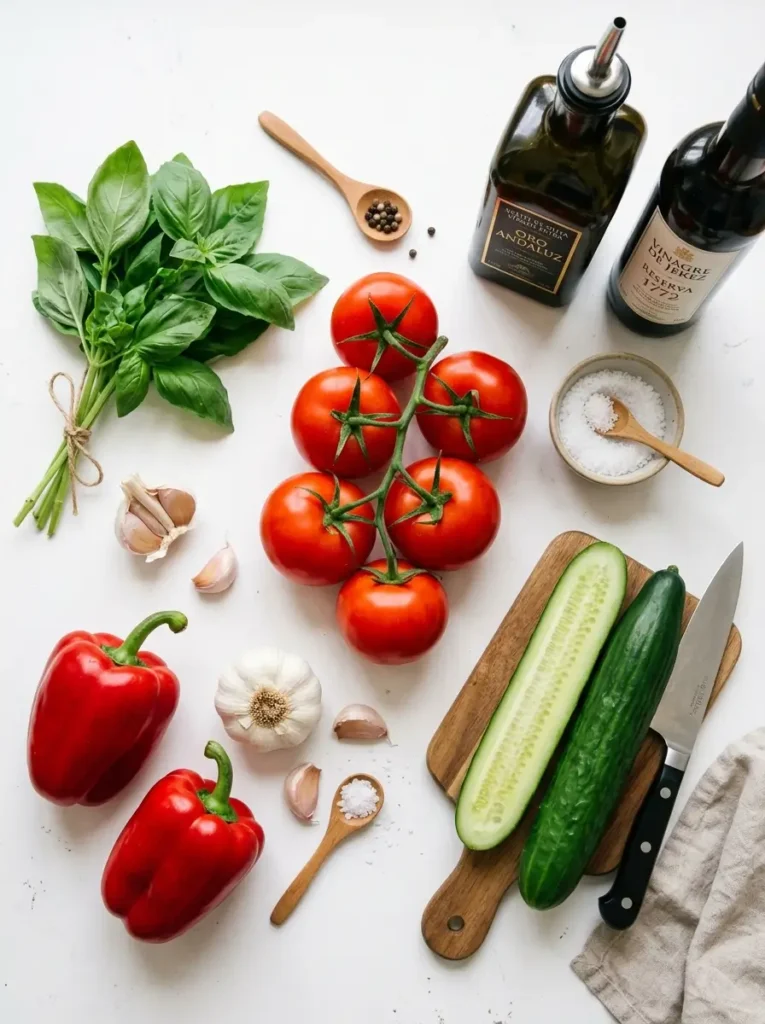
900g (2 lbs) ripe vine or heirloom tomatoes, roughly chopped
1 medium cucumber (300g), peeled, deseeded, roughly chopped
1 medium red bell pepper, deseeded, roughly chopped
2 small garlic cloves, peeled
4 tbsp extra virgin olive oil (best quality available)
2 tbsp sherry vinegar (authentic Spanish choice — not red wine vinegar)
1 tsp kosher salt (plus more to taste)
½ tsp black pepper
120ml (½ cup) cold water (adjust for desired consistency)
1 slice stale white bread, crusts removed (optional — thickens the soup authentically)
✨ Optional Variations:
Watermelon Gazpacho — replace 450g tomatoes with seedless watermelon + add 10 fresh mint leaves
Green Gazpacho — tomatillos + green cucumber + green pepper + 1 ripe avocado + lime juice
White Gazpacho (Ajo Blanco) — 150g blanched almonds + 3 garlic cloves + 100g white grapes + sherry vinegar + olive oil + water
Spicy Gazpacho — classic base + 1 jalapeño deseeded + ½ tsp smoked paprika + extra garlic clove
🥣 Classic Garnishes (for serving):
Extra virgin olive oil, for drizzling
Finely diced cucumber, red pepper, and red onion
Homemade croutons
Fresh basil or flat-leaf parsley leaves
Flaky sea salt
Directions
- Roughly chop the tomatoes, cucumber, red pepper, and garlic into large pieces. Place in a large glass bowl.
- Add the olive oil, sherry vinegar, salt, and pepper. Toss everything together to coat evenly.
- Marinate for 30 minutes to 1 hour at room temperature — this step dramatically deepens the final flavour and should never be skipped. Cover and let sit.
- Transfer the marinated vegetables and all their juices into a high-powered blender. Add the stale bread if using.
- Blend on high speed for 2–3 minutes until completely smooth. Add cold water gradually while blending to reach your preferred consistency — thicker for a rich, velvety soup; thinner for a lighter, more drinkable version.
- For a restaurant-quality result, press the blended gazpacho through a fine mesh strainer using the back of a spoon, discarding all solids. This produces a silky, refined soup with no skin or seed fragments.
- Taste and adjust seasoning — add more salt for depth, more sherry vinegar for brightness, more olive oil for richness, or more water for a lighter consistency.
- Transfer to an airtight glass container or bowl. Cover tightly and refrigerate for a minimum of 2 hours — overnight chilling produces the best, most developed flavour.
- Before serving, stir well as some separation is completely normal. Taste once more and adjust seasoning — cold temperatures mute flavours slightly so you may need a final pinch of salt.
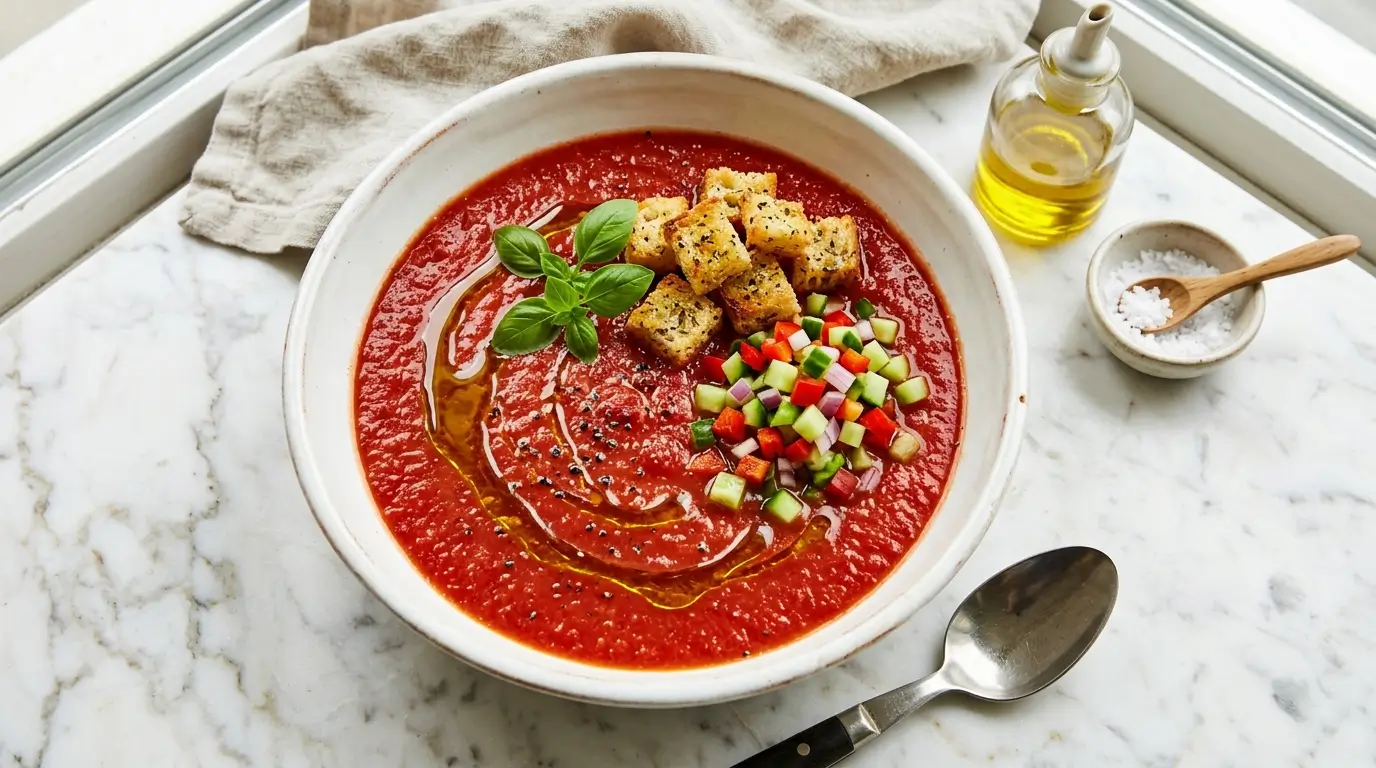
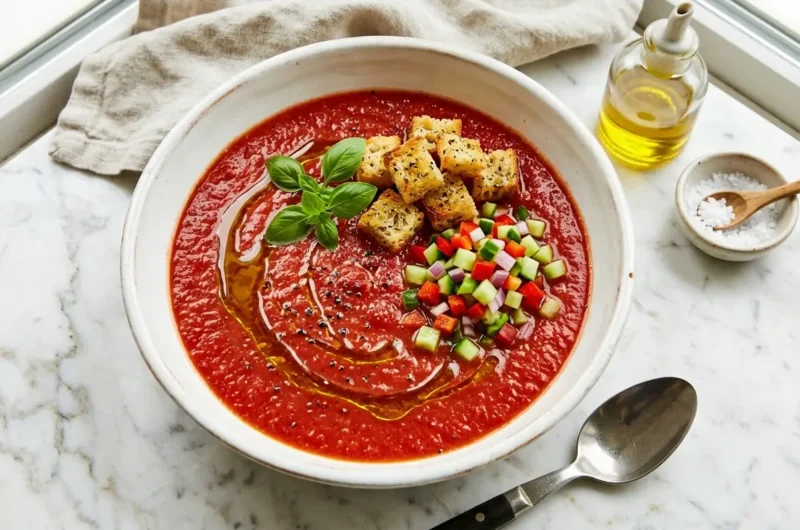
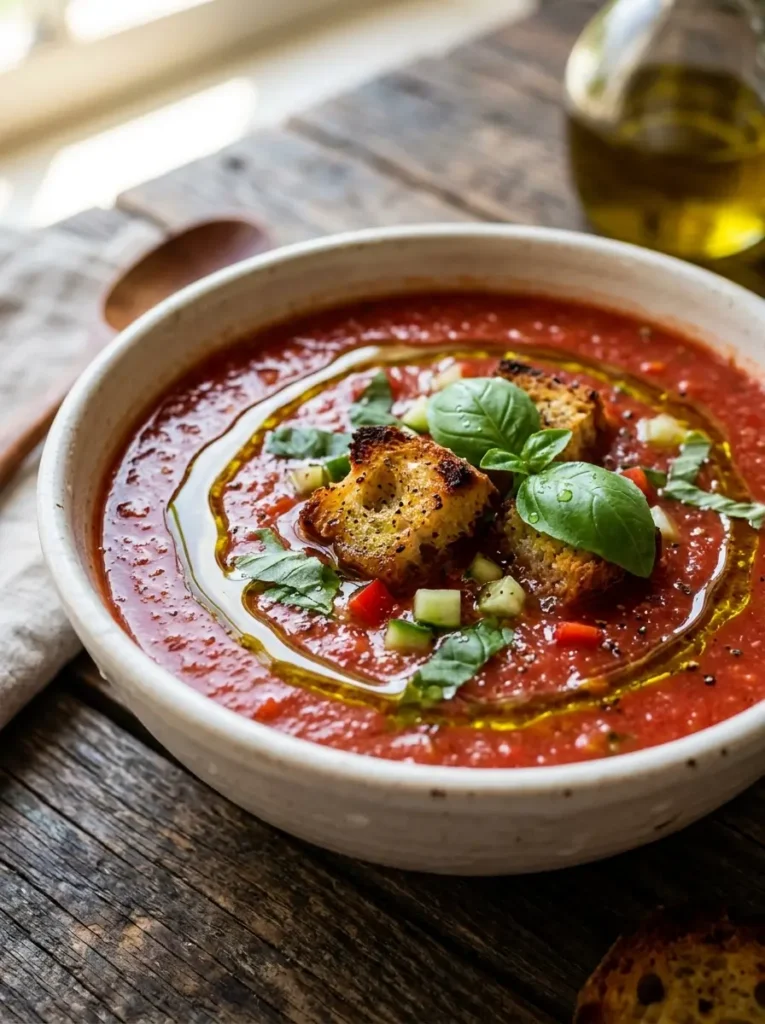
- Ladle into chilled bowls. Finish each bowl with a generous drizzle of extra virgin olive oil, a small pile of diced cucumber and red pepper, a few croutons, and a fresh basil leaf. Serve immediately while thoroughly chilled.
Recipe Video
Notes
- Use the ripest tomatoes possible — this is the single most critical factor; peak-season vine-ripened or heirloom tomatoes produce an extraordinary soup; pale, watery out-of-season tomatoes produce a flat, disappointing result regardless of technique
- Always marinate before blending — tossing the chopped vegetables with olive oil, vinegar, salt, and garlic for 30–60 minutes before blending dramatically improves the depth and complexity of the final flavour; never skip this step
- Always use sherry vinegar — sherry vinegar is the authentic Spanish choice and produces a noticeably more complex, rounded acidity than red wine vinegar; it is the single ingredient that most distinguishes authentic gazpacho from a generic blended tomato soup
- Always strain for best results — pressing through a fine mesh strainer removes all skin and seed fragments and produces a silky, refined soup that is genuinely superior to an unstrained version
- Chill overnight for best flavour — freshly blended gazpacho always tastes raw and harsh; overnight chilling allows the acidity to mellow, the garlic to soften, and all the flavours to merge into a harmonious, complex whole
Gazpacho Variations (5 Ways)
The Classic Andalusian version is the most universally loved and the definitive starting point — it pairs beautifully with our Chicken Skewers Grilled as a stunning chilled starter before the main event hits the grill. The Watermelon Gazpacho is the most visually impressive variation for summer entertaining — the deep pink colour and sweet-savoury balance genuinely stops guests in their tracks.
What To Serve With Gazpacho (Perfect Pairings)
Gazpacho works beautifully as a chilled starter, a light lunch, or an elegant summer dinner party first course alongside a wide range of dishes.
🍽️ Food Pairings:
- Grilled chicken skewers — our Chicken Skewers Grilled served after a chilled bowl of gazpacho makes a stunning, complete Spanish-inspired summer dinner
- Crusty bread or crostini — the most classic and traditional accompaniment to gazpacho in Spain; warm crusty bread for dunking is mandatory for an authentic experience
- Pico de gallo and tortilla chips — our Pico de Gallo Recipe served alongside gazpacho for a fresh tomato-forward summer starter spread
- Corn on the cob — our Corn on the Cob on the Grill served alongside gazpacho makes a complete, vibrant summer cookout starter and side combination
- Asparagus salad — our Asparagus Salad alongside a chilled bowl of gazpacho is one of the most elegant, light summer lunch combinations
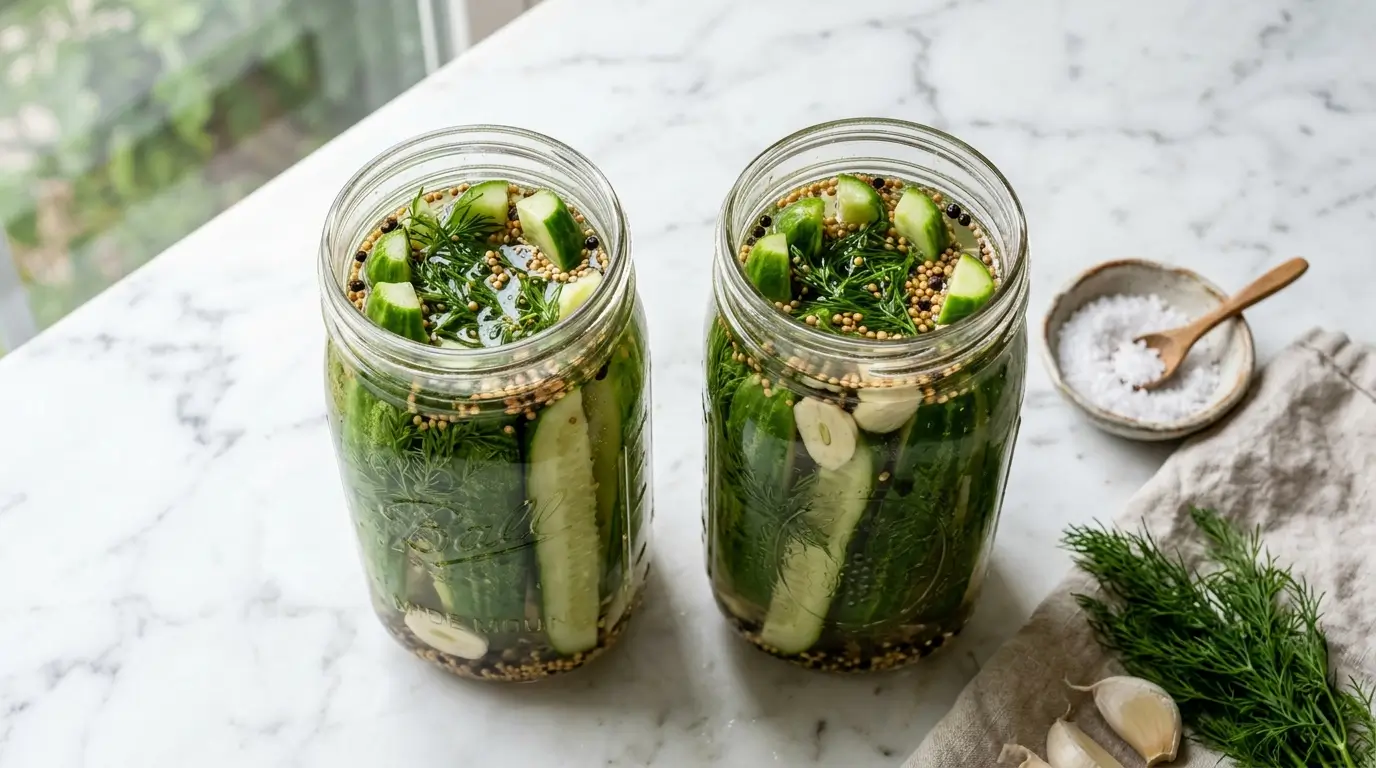
- Refrigerator pickles — our Refrigerator Pickles alongside gazpacho adds a sharp, crunchy, acidic counterpoint that cuts through the richness of the olive oil beautifully
- Classic toppings — diced cucumber, croutons, drizzle of extra virgin olive oil, finely chopped red onion, and a scattering of fresh basil served alongside as garnishes for guests to customise their own bowl
☕ Beverages:
- Chilled dry rosé — the most elegant and classic wine pairing with gazpacho; the crisp acidity and light fruit of a dry Provençal rosé mirrors the tomato and vinegar beautifully
- Sparkling water with lemon — the most refreshing non-alcoholic pairing; the effervescence and citrus complement the bright acidity of the soup
- Fino sherry — the most authentically Spanish pairing; the dry, nutty, saline quality of a chilled Fino sherry is extraordinary alongside Gazpacho Andaluz
Expert Tips for Perfect Gazpacho
✅ Use the ripest, most flavourful tomatoes possible — this is the single most important factor in great gazpacho; watery, pale, out-of-season tomatoes produce a flat, disappointing result regardless of technique; peak-season heirloom or vine-ripened tomatoes produce an extraordinary soup
✅ Always marinate before blending — for the deepest, most complex flavour, roughly chop all vegetables and toss with olive oil, vinegar, garlic, and salt; let them marinate for 30 minutes to 1 hour before blending; this step dramatically improves the final flavour
✅ Blend in stages from smooth to chunky — blend the tomatoes first until completely smooth, then add the remaining vegetables and blend to your preferred texture; this technique gives you complete control over the final consistency
✅ Always strain for restaurant quality — pressing the blended gazpacho through a fine mesh strainer removes all skin and seed fragments and produces a silky, refined soup that is genuinely superior to an unstrained version
✅ Always use sherry vinegar for authenticity — sherry vinegar is the authentic Spanish choice and produces a noticeably more complex, rounded acidity than red wine vinegar or white wine vinegar; it is the single ingredient that most distinguishes authentic gazpacho from a generic blended tomato soup
✅ Always use high-quality extra virgin olive oil — the olive oil is one of the primary flavour components of gazpacho, not just a background ingredient; use the best extra virgin olive oil you have and add a finishing drizzle over each bowl just before serving
✅ Chill for at least 2 hours, overnight is best — freshly blended gazpacho tastes flat and harsh; chilling allows the flavours to meld, the acidity to mellow, and the soup to develop the full complexity that makes authentic gazpacho so remarkable
Storage Instructions
Make-ahead tip: Gazpacho is the single greatest make-ahead soup in the world — it is genuinely better on day two than day one as the flavours deepen and fully integrate overnight. Make it the evening before serving for the most flavourful, restaurant-quality result with zero day-of effort. Pair with pre-made Refrigerator Pickles and our Pico de Gallo Recipe for a completely prepare-ahead summer entertaining spread.
Nutrition Per Serving (Approximate)
| Nutrient | Amount | % Daily Value |
|---|---|---|
| Calories | 120 kcal | — |
| Carbohydrates | 12g | 4% |
| Sugar | 7g | — |
| Protein | 2g | 4% |
| Fat | 8g | 10% |
| Fibre | 3g | 11% |
| Vitamin C | 35mg | 39% |
| Sodium | 320mg | 14% |
Based on 6 servings, Classic Andalusian version with extra virgin olive oil and sherry vinegar
Troubleshooting
Frequently Asked Questions
❓ What tomatoes are best for gazpacho?
The absolute best tomatoes for gazpacho are peak-season vine-ripened or heirloom tomatoes — any variety that is deeply red, heavily fragrant, and bursting with sweet-acidic flavour at room temperature. Roma tomatoes work well for their low water content and concentrated flavour. Never use pale, hard, out-of-season supermarket tomatoes — they are the single biggest reason most homemade gazpacho falls flat.
❓ Should gazpacho be smooth or chunky?
Authentic Gazpacho Andaluz is traditionally blended completely smooth and then strained for a silky, refined result. Many modern versions leave it slightly chunky for texture and visual interest. Both are delicious — blend to your personal preference. For a classic restaurant-style presentation, always strain. For a more rustic, home-style version, leave it slightly textured.
❓ What is the difference between gazpacho and salmorejo?
Both are classic chilled Spanish tomato soups, but salmorejo is significantly thicker and richer — it contains a higher proportion of bread and olive oil which creates a creamy, almost bisque-like consistency. Gazpacho is thinner, lighter, and more vegetable-forward with cucumber and pepper as key components. Salmorejo is typically garnished with hard-boiled egg and Iberian ham; gazpacho is garnished with diced fresh vegetables and croutons.
❓ Can I make gazpacho without a blender?
Traditionally, authentic Spanish gazpacho was made entirely by hand using a mortar and pestle — the vegetables were ground and pounded by hand into a thick, rustic paste. This method is entirely viable and produces an outstanding result with a more textured, rustic character than blended gazpacho. Alternatively, a food processor produces acceptable results, though the texture is slightly less smooth than a high-powered blender.
❓ Why does my gazpacho taste better the next day?
Overnight chilling allows several things to happen simultaneously — the acid from the vinegar and tomatoes mellows and integrates, the garlic softens from sharp and raw to rounded and complex, the olive oil emulsifies more fully into the soup, and all the individual vegetable flavours merge into a unified, harmonious whole. Freshly blended gazpacho always tastes raw and harsh by comparison.