


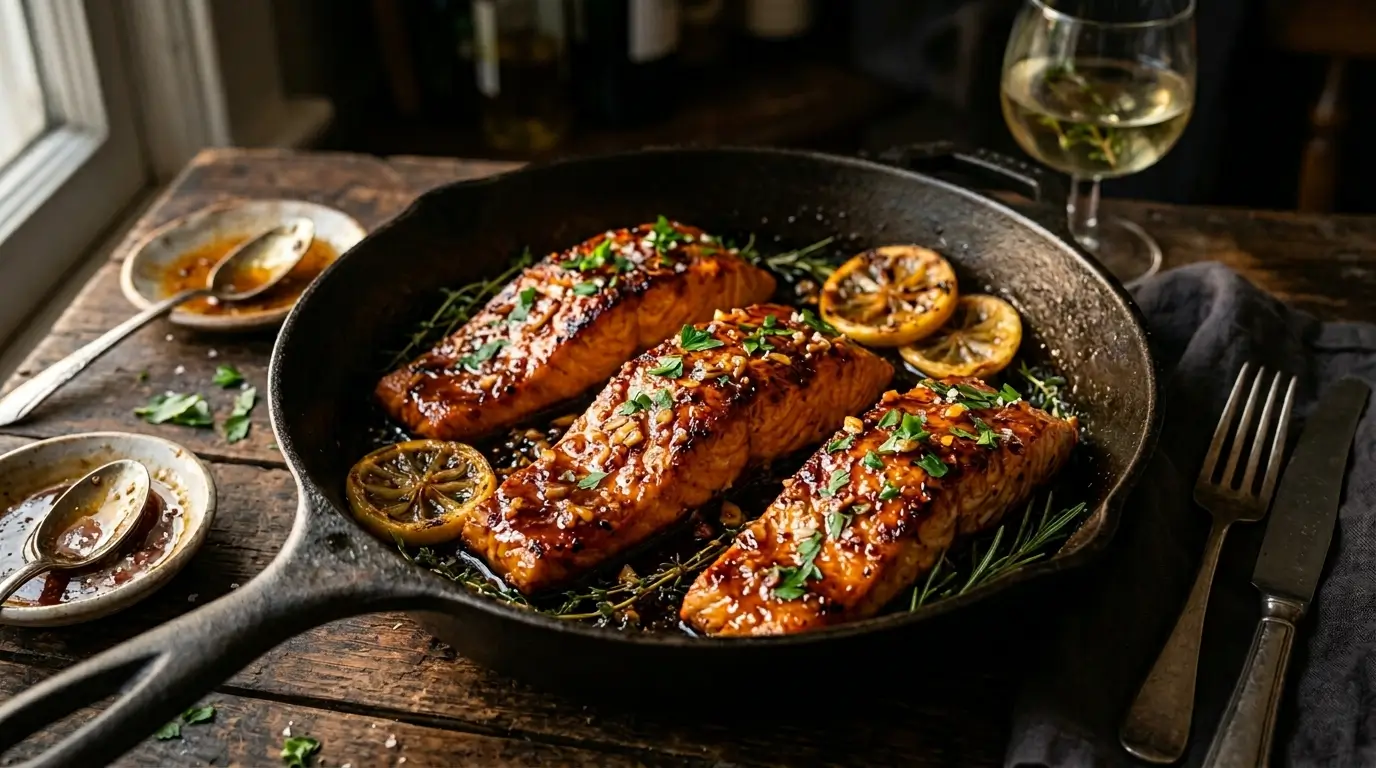
The best honey glazed salmon recipe you will ever make — juicy, perfectly flaky salmon fillets seared to a stunning golden crust and lacquered in a sticky, savory-sweet honey garlic glaze made with just five pantry ingredients that you almost certainly already have on your shelf. This is the salmon recipe that consistently outperforms every other fish recipe on food blogs across the internet because it delivers a genuinely restaurant-quality result — caramelized glaze, crispy skin, perfectly cooked center — using a single skillet, zero marinating time, and less than 20 minutes of total cooking from cold fillet to plated dinner. Whether you serve it over coconut rice with roasted asparagus for a weeknight dinner, pile it into a rice bowl with edamame and shredded carrots, or plate it alongside garlic mashed potatoes for a dinner party main, this honey glazed salmon recipe is the most versatile, most reliably impressive fish dish in your entire repertoire.
Table of Contents
Why This Honey Glazed Salmon Goes Viral Every Week
Food bloggers and home cooks share this recipe constantly because it solves the single biggest problem most people have with cooking fish at home — it produces a result that looks and tastes genuinely professional without requiring any advanced technique, specialized equipment, or ingredients beyond what is already in a standard pantry. The honey garlic glaze is a perfectly balanced four-ingredient combination — honey for sweetness and caramelization, soy sauce for deep umami saltiness, fresh lemon juice for brightness, and red pepper flakes for a subtle heat that keeps every bite interesting — that reduces in the same pan as the salmon into a thick, lacquered coating that clings to every fillet and photographs with the kind of glossy, jewel-toned visual impact that performs consistently well on Pinterest and Instagram. According to The Chunky Chef, the technique of adding minced garlic directly to the hot pan before the glaze — rather than into the sauce mixture — toasts the garlic slightly and adds a deeper, more complex savory foundation that makes the entire dish taste genuinely addictive.
Why everyone makes this recipe on repeat:
- 20 minutes total, zero marinating — from cold salmon fillet to plated dinner in under 20 minutes; no overnight marinade, no advance prep
- One skillet, minimal cleanup — glaze, sear, and finish all in the same pan; the reduced glaze in the pan becomes the sauce
- Five pantry ingredients for the glaze — honey, soy sauce, lemon juice, garlic, and red pepper flakes; nothing obscure or specialty
- Four cooking method options — pan sear, oven roast, air fryer, or grill; the recipe adapts to whatever equipment you have
- Endlessly versatile serving options — rice bowl, dinner party plated main, meal prep for the week, or flaked into a salad
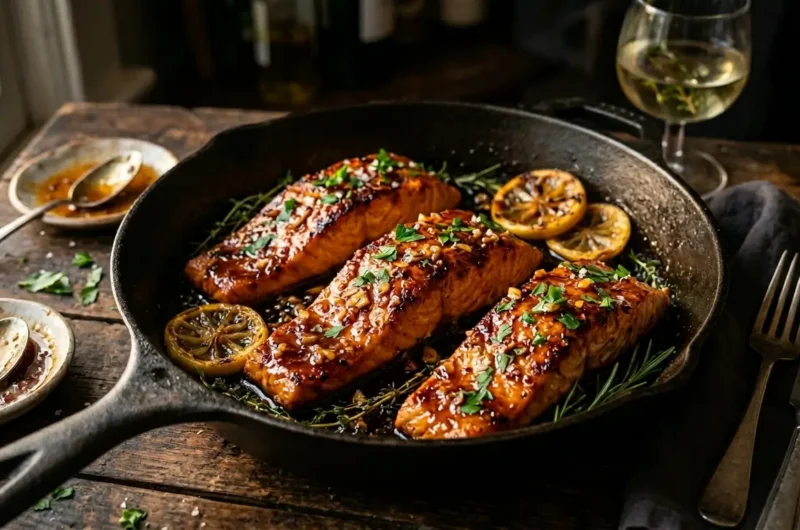
Honey Glazed Salmon Recipe (Best Honey Garlic Glaze — Ready in 20 Minutes)
Course: Dinner, MainCuisine: AmericanDifficulty: Easy4
servings5
minutes15
minutes552
kcal20
minutesThe best honey glazed salmon recipe — juicy, perfectly flaky salmon fillets seared to a golden crust and lacquered in a sticky, savory-sweet honey garlic glaze made with just five pantry ingredients. One skillet, zero marinating, ready in 20 minutes.
Ingredients
FOR THE SALMON:
4 salmon fillets (170g / 6oz each), skin-on
3 tbsp extra-virgin olive oil, divided
Kosher salt and freshly cracked black pepper
3 garlic cloves, minced
1 lemon, thinly sliced into rounds
FOR THE HONEY GARLIC GLAZE:
⅓ cup (80ml) raw honey
¼ cup (60ml) low-sodium soy sauce
2 tbsp fresh lemon juice
1 tsp red pepper flakes
½ tsp fresh grated ginger (optional but recommended)
FOR GARNISH:
Fresh chopped parsley or cilantro
Toasted sesame seeds
Sliced green onions
Extra lemon wedges for serving
Directions
- MAKE THE GLAZE: Whisk together honey, low-sodium soy sauce, fresh lemon juice, red pepper flakes, and ginger (if using) in a small bowl until fully combined. Set aside at room temperature.
- PREP THE SALMON: Pat every salmon fillet completely dry on all sides using paper towels. Season generously with kosher salt and freshly cracked black pepper on all sides immediately before cooking.
- HEAT THE PAN: Heat 2 tbsp olive oil in a large heavy-bottomed skillet over medium-high heat until shimmering and visibly hot.
- SEAR FLESH SIDE DOWN: Add salmon fillets flesh-side down. Cook completely undisturbed for 3 minutes until a deep golden crust forms.
- FLIP AND ADD GARLIC: Flip fillets carefully. Add remaining 1 tbsp olive oil and minced garlic to the pan. Cook 1 minute until garlic is golden and fragrant.
- ADD GLAZE AND LEMON: Pour honey glaze evenly over and around fillets. Add lemon slices to the pan. Baste salmon continuously by spooning hot glaze over fillets every 30 seconds. Cook 3–4 minutes until glaze reduces by one-third and coats every fillet in a thick, glossy lacquer.
- REST AND SERVE: Remove from heat. Rest in pan 60 seconds. Plate immediately and spoon remaining pan glaze over each fillet. Garnish with caramelized lemon slices, fresh parsley, sesame seeds, and green onions.
Recipe Video
Notes
- Pat salmon completely dry — this is the single most important step in the entire recipe. Moisture on the surface creates steam instead of sear, which prevents the golden crust from forming. Use paper towels and press firmly on all surfaces until no moisture transfers.
- Low-sodium soy sauce only — the glaze reduces by one-third during cooking, concentrating the salt dramatically. Regular soy sauce makes the finished glaze unpleasantly over-salted. This is non-negotiable.
- Never move the salmon for the first 3 minutes — undisturbed contact with the hot pan surface is what builds the golden crust. Moving it early tears the crust and causes sticking. The fillet will release naturally from the pan when the crust is ready.
- Baste continuously — the glossy, lacquered restaurant-quality coating comes entirely from repeatedly spooning hot glaze over the top of each fillet during the final cooking stage. Without basting you get a brushed-on finish rather than a true lacquer.
- Make the glaze ahead — the honey garlic glaze keeps in a sealed jar in the refrigerator for up to 2 weeks. Making it ahead makes this recipe genuinely instantaneous on busy weeknights.
Equipment Needed
- Large heavy-bottomed skillet or cast iron pan (12-inch recommended)
- Small mixing bowl and whisk
- Tongs or a wide spatula
- Paper towels (for patting salmon dry — the single most important prep step)
- Microplane or fine grater (for ginger, if using)
- Spoon for basting
The Five Golden Rules
Four Cooking Methods
🍳 Pan Sear (Recommended — Best Result)
The method detailed above — produces the deepest golden crust, most caramelized glaze, and best overall texture. Total time: 20 minutes. Equipment: 12-inch heavy skillet or cast iron pan.
🔥 Oven Roast
Preheat oven to 200°C (400°F). Place salmon skin-side down on a lined baking sheet. Brush glaze generously over each fillet. Roast 10–12 minutes. Switch to broil for the final 2 minutes to caramelize the glaze surface — watch closely as honey burns quickly under direct broiler heat. Total time: 20 minutes.
💨 Air Fryer
Preheat air fryer to 200°C (400°F). Place salmon skin-side down in basket. Cook 8 minutes. Pull out, brush generously with glaze, and cook 2 more minutes until glaze caramelizes. Total time: 15 minutes. Best method for the crispiest skin result.
🔥 Grill
Preheat grill to medium-high. Oil grates generously to prevent sticking. Cook salmon skin-side down 4 minutes, flip, cook 3 more minutes. Brush glaze on in the final 2 minutes only — adding glaze too early causes the honey to burn over direct flame. Total time: 15 minutes.
Six Stunning Variations
🍯 Classic Honey Garlic Glazed Salmon
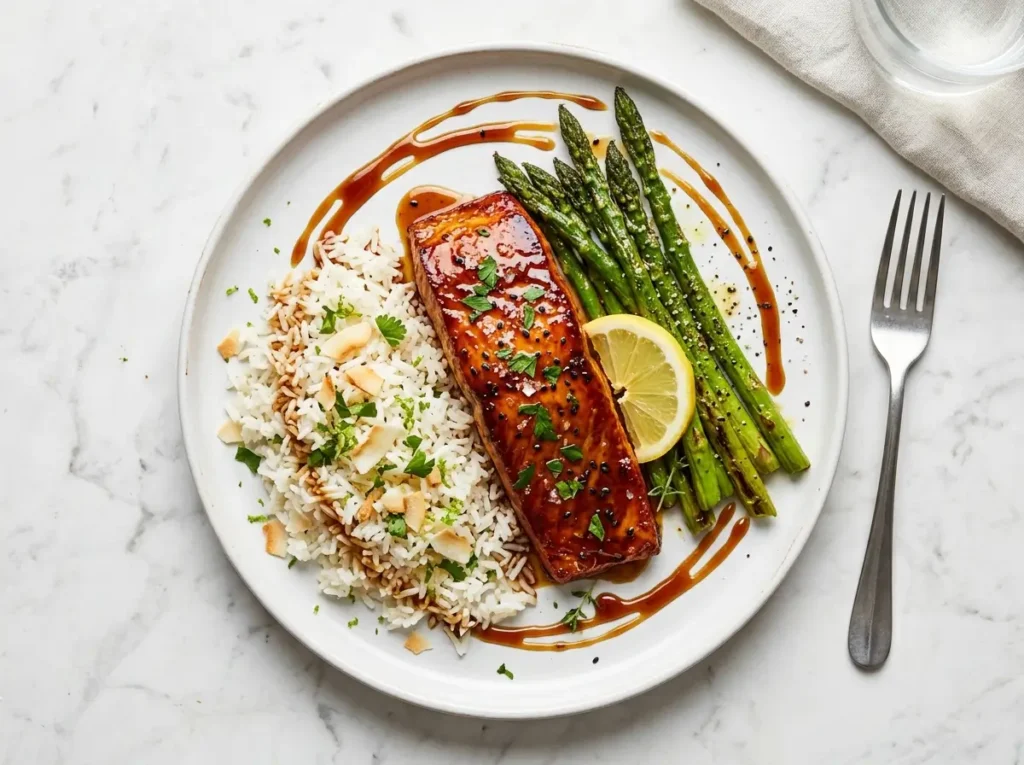
The base recipe as written — the perfect starting point and the most universally loved version. Serve over coconut rice with roasted asparagus for the most complete, photogenic dinner presentation.
🌶️ Honey Sriracha Salmon
Replace red pepper flakes with 1 tbsp sriracha added directly to the glaze — bolder heat, a slightly thicker glaze, and a vibrant red-orange color that photographs dramatically. Pairs perfectly with coconut rice and sliced cucumber for a cooling contrast.
🍋 Lemon Honey Glazed Salmon
Double the lemon juice to 4 tbsp and add 1 tsp lemon zest directly to the glaze — a brighter, more citrus-forward profile where the lemon is the dominant flavor rather than a background note. According to RecipeTin Eats, this variation pairs most beautifully with garlic mashed potatoes and roasted asparagus for a complete plated dinner.
🫚 Honey Miso Glazed Salmon
Replace soy sauce with 2 tbsp white miso paste whisked into the honey and lemon juice — deeper, earthier, more complex umami flavor that produces a glaze with a distinctly Japanese-inspired profile. According to Omnivore’s Cookbook, white miso creates a glaze that caramelizes with slightly more depth and a darker, more complex color than straight soy sauce.
🫚 Honey Garlic Ginger Salmon
Double the ginger to 1 full teaspoon of freshly grated ginger and add ½ tsp sesame oil to the glaze — a warm, aromatic, Asian-inspired variation that pairs perfectly with steamed jasmine rice, bok choy, and toasted sesame seeds. According to Sally’s Baking Addiction, this is the most popular variation for meal prep because the ginger flavor intensifies overnight and makes leftovers taste even better than fresh.
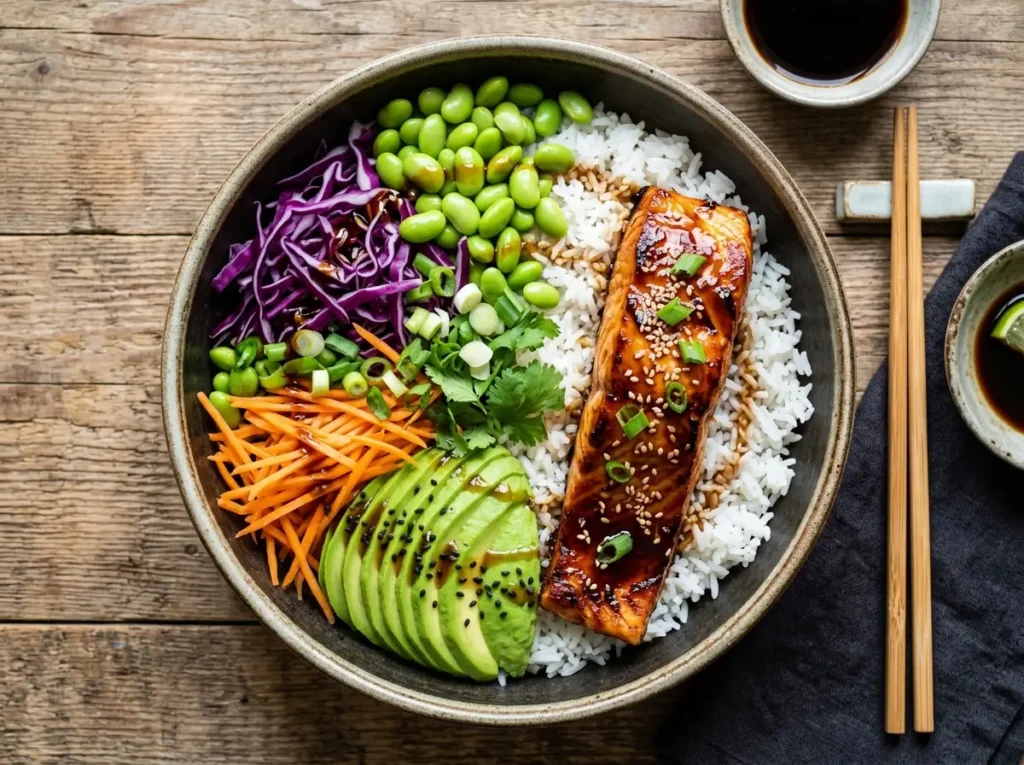
🍚 Honey Glazed Salmon Bowl
Serve the base recipe salmon over steamed jasmine or brown rice with broccoli florets, shredded purple cabbage, edamame, sliced avocado, and a generous drizzle of remaining pan glaze over the whole bowl. According to The Recipe Critic, this bowl format has become the most pinned salmon presentation of 2026 — the color contrast between the orange glazed salmon, green edamame, purple cabbage, and white rice creates a genuinely stunning visual spread.
Pro Tips for Restaurant-Quality Results
✅ Buy skin-on fillets every time — the skin acts as a natural protective barrier during the initial sear, prevents the delicate flesh from direct contact with the scorching pan, and crisps into the most satisfying texture when properly seared; removing the skin before cooking is the single most common salmon mistake
✅ Bring salmon to room temperature 15 minutes before cooking — cold salmon straight from the fridge creates uneven cooking where the outside is done but the center is still cold; 15 minutes on the counter equalizes the temperature and produces a uniformly cooked fillet
✅ Use raw honey, not processed — raw honey has a more complex flavor profile and caramelizes more beautifully; processed honey tends to burn faster in a hot pan due to its higher fructose content
✅ The glaze reduces fast — honey scorches quickly; if the glaze is darkening too rapidly, reduce heat to medium immediately and add a tablespoon of water to the pan to slow the caramelization
✅ Never overcook — salmon is done when it flakes easily with a fork but still looks slightly translucent in the very center; the residual heat from the pan and glaze continues cooking the fish after you remove it from heat
✅ Season the glaze before it goes in — always taste the honey soy mixture before adding to the pan; different soy sauce brands vary significantly in saltiness and the glaze is your one chance to adjust before it hits the fish
Serving Suggestions (Complete Meal Ideas)
🍚 For a Weeknight Dinner:
- Coconut jasmine rice + roasted broccolini + honey glazed salmon with pan glaze drizzled over everything
- Garlic mashed potatoes + roasted asparagus + lemon honey glazed salmon (lemon variation)
🥗 For a Lighter Lunch:
- Mixed greens + sliced avocado + cucumber + honey glazed salmon flaked over the top + remaining glaze as dressing
- Butter lettuce cups + honey glazed salmon + shredded carrot + sesame seeds
🍱 For Meal Prep:
- Honey glazed salmon bowl with brown rice, roasted broccoli, edamame, and shredded purple cabbage — keeps 4 days in the fridge, flavors deepen overnight
🎉 For a Dinner Party:
- Plated presentation — salmon fillet centered on the plate, garlic mashed potatoes quenelled alongside, roasted asparagus spears fanned out, pan glaze drizzled in an arc over the whole plate, lemon wheel and fresh parsley garnish
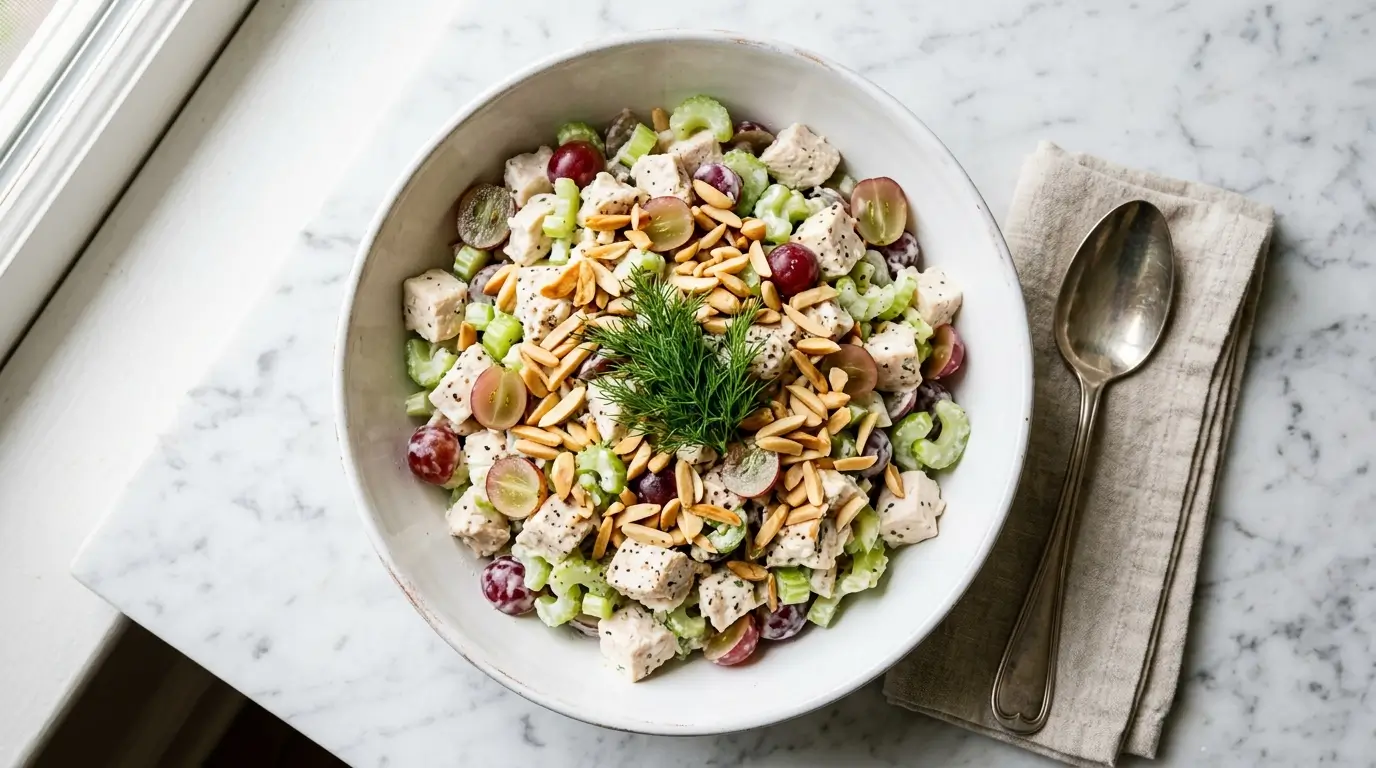
Pair with our Best Chicken Salad Recipe and Lemonade Bar Recipes for a complete summer entertaining spread that covers every course from appetizer to drink station.
Storage & Reheating Guide
Common Mistakes to Avoid
❌ Not drying the salmon — the most universally made mistake; a wet surface steams instead of sears and you lose the entire golden crust
❌ Cold pan — adding salmon to a pan that is not yet hot enough produces a grey, steamed exterior instead of the golden sear
❌ Moving the fish too early — the salmon will stick if you try to move it before the crust has fully formed; it releases naturally when ready
❌ Using regular soy sauce — the glaze reduces by one-third during cooking, concentrating the salt dramatically; regular soy makes the finished dish unpleasantly salty
❌ Skipping the basting — the glossy lacquered coating comes entirely from repeatedly spooning hot glaze over the top; without basting you get a brushed-on finish rather than a restaurant-quality lacquer
❌ Overcooking — salmon continues cooking in the residual heat after leaving the pan; pull it off heat when the center still looks slightly translucent and it will be perfect by the time it reaches the plate
Nutrition Per Serving (1 fillet with glaze — approximately 200g)
| Nutrient | Amount |
|---|---|
| Calories | 552 kcal |
| Protein | 37g |
| Carbohydrates | 27g |
| Fat | 33g |
| Saturated Fat | 6g |
| Sugar | 24g |
| Sodium | 677mg |
| Potassium | 748mg |
| Omega-3 Fatty Acids | 2.5g |
Frequently Asked Questions
❓ Can I use frozen salmon for this recipe?
Yes — thaw completely in the refrigerator overnight, then pat extremely dry before cooking. Frozen salmon releases significantly more moisture than fresh as it thaws, so the drying step is even more critical; press paper towels firmly onto every surface and repeat until no moisture transfers to the towel.
❓ What is the best type of salmon to use?
King (Chinook) salmon has the highest fat content and produces the most luxuriously rich, buttery result — the glaze caramelizes most beautifully on a fatty fillet. Sockeye is the most widely available and produces excellent results at a lower price point. Atlantic salmon works perfectly well and is the most budget-friendly option.
❓ How do I know when salmon is done?
The most reliable test is the flake test — press the thickest part of the fillet gently with a fork; if it separates into clean flakes, it is done. The internal temperature should read 52°C (125°F) for medium — slightly translucent in the very center — or 60°C (140°F) for fully cooked through. The salmon will continue cooking from residual heat after leaving the pan, so always pull it 1–2 degrees below your target temperature.
❓ Can I make the glaze ahead of time?
Absolutely — the honey garlic glaze keeps in a sealed jar in the refrigerator for up to 2 weeks. It thickens slightly when cold; let it sit at room temperature for 10 minutes before using or microwave for 10 seconds to loosen. Making the glaze ahead makes this recipe genuinely instantaneous on busy weeknights.
❓ What if I don’t have a cast iron or heavy skillet?
Any oven-safe skillet works for the pan sear method — the key is that it holds heat well enough to maintain temperature when the cold salmon is added. A thin non-stick pan loses heat too quickly and produces a grey exterior instead of a golden sear. If your skillet is not heavy enough, the oven roast method produces excellent results without requiring a high-heat sear.