


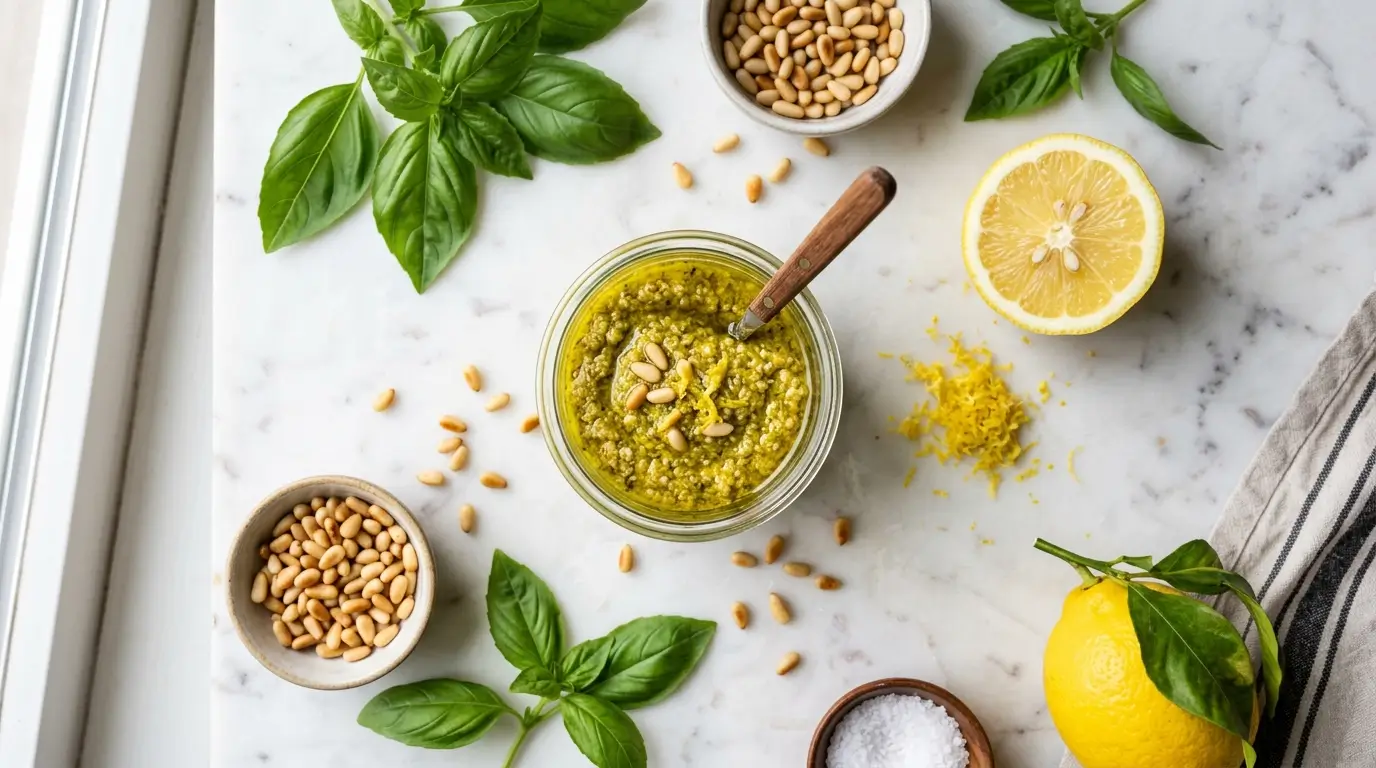
If you think classic basil pesto is good, wait until you try this bright, citrusy homemade lemon pesto recipe that takes everything you love about traditional pesto and adds a bold, sunny Mediterranean twist. Made with fresh lemon zest, toasted pine nuts, Parmigiano-Reggiano, basil, and quality olive oil, this lemon pesto is ready in just 15 minutes with zero cooking required. Once you taste this vibrant, restaurant-quality sauce, it will become the most-used condiment in your kitchen.
Table of Contents
What Is Lemon Pesto & Why You’ll Love It
Lemon pesto — known in Italian as Pesto di Limone — is a no-cook sauce originating from the sun-drenched Amalfi Coast of southern Italy, where lemons are so abundant and fragrant they’re practically a local currency. Unlike classic Pesto alla Genovese which is built entirely around fresh basil, lemon pesto uses the yellow zest and juice of fresh lemons as its flavor foundation, supported by pine nuts, Parmigiano-Reggiano, garlic, and extra-virgin olive oil blended into a thick, glossy, intensely aromatic sauce.
According to The Mediterranean Dish, lemon pesto delivers a bright, sunny, savory Mediterranean flavor profile that is more refreshing and versatile than traditional basil pesto — perfect for pasta, seafood, grilled vegetables, sandwiches, and dips. The key to its extraordinary flavor lies in using only the bright yellow zest, carefully avoiding the bitter white pith underneath, which gives you pure citrus aromatics without any bitterness.
What makes homemade lemon pesto genuinely superior to any store-bought version is freshness — commercial pesto is pasteurized and preserved, which kills the delicate lemon aromatics entirely. When you make it at home, the vibrant citrus oils in the zest are at their peak, the pine nuts are freshly toasted, and the entire sauce comes together in minutes with nothing but a blender.
Key Benefits:
- Zero cooking required — just peel, blend, and serve; the entire recipe takes 15 minutes flat
- Only 6 ingredients — lemon, pine nuts, Parmigiano-Reggiano, basil, garlic, and olive oil
- Endlessly versatile — works as a pasta sauce, sandwich spread, pizza base, marinade, or dip
- Naturally gluten-free — no flour or starch of any kind; works for almost every dietary need
- Freezer-friendly — freeze in ice cube trays for perfectly portioned sauce all year long
- Impressive flavor payoff — tastes like a restaurant sauce but costs a fraction of the price
🍳 Equipment You’ll Need to Make Lemon Pesto Recipe (4 Items)
- Food processor or blender (essential — gives you full control over texture from chunky to silky smooth)
- Y-peeler or sharp paring knife (for removing lemon zest cleanly without the bitter white pith)
- Citrus squeezer (extracts maximum juice cleanly with no seeds)
- Airtight glass jar (best for storing — preserves the bright citrus aroma that plastic absorbs)
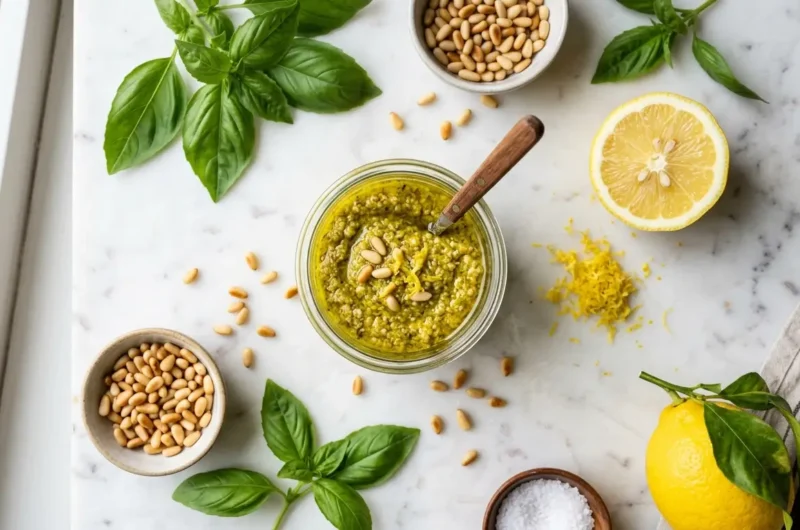
How to Make Lemon Pesto Recipe (Best Homemade Lemon Pesto 2026)
Course: SauceCuisine: Italian, MediterraneanDifficulty: Easy12
servings15
minutes10
minutes101
kcal25
minutesA bright, vibrant homemade lemon pesto made with fresh lemon zest, toasted pine nuts, Parmigiano-Reggiano, basil, garlic, and extra-virgin olive oil. Ready in 15 minutes with zero cooking required.
Ingredients
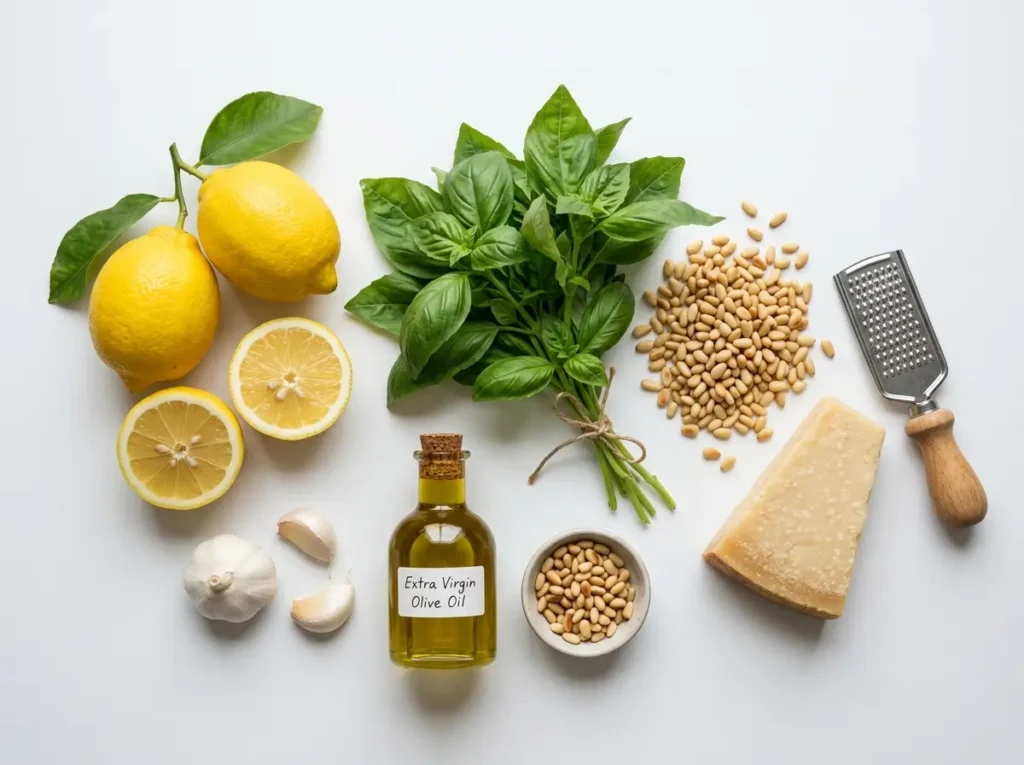
2 large lemons, zested (approx. 2 tbsp zest) + 2 tbsp fresh lemon juice
60g (¼ cup) pine nuts, lightly toasted
50g (½ cup) Parmigiano-Reggiano, freshly grated
30g (1 cup packed) fresh basil leaves
2 garlic cloves, peeled
120ml (½ cup) extra-virgin olive oil
½ tsp salt (adjust to taste)
¼ tsp black pepper
Directions
- Toast pine nuts in a dry skillet over medium heat for 3–4 minutes, stirring constantly until golden and fragrant. Remove immediately and let cool.
- Using a sharp Y-peeler, carefully remove only the bright yellow zest from both lemons — avoid the bitter white pith underneath.
- Add lemon zest, toasted pine nuts, grated Parmigiano-Reggiano, basil leaves, garlic cloves, lemon juice, salt, and black pepper to a food processor.
- Pulse 5–6 times until roughly chopped and combined.
- With the processor running, slowly drizzle in olive oil in a thin steady stream until the pesto reaches your desired consistency.
- Taste and adjust — add more lemon juice for brightness, more Parmesan for depth, or more oil to loosen.
- Transfer to a glass jar, smooth the top, and pour a thin layer of olive oil over the surface to seal and preserve color.
- Use immediately or refrigerate for up to 1 week.
Recipe Video
Notes
- Avoid the white pith — peel only the bright yellow zest layer; pith = bitterness that cannot be fixed once blended
- Toast pine nuts every time — raw pine nuts are bland; 3–4 minutes in a dry pan transforms the entire flavor of the sauce
- Drizzle oil slowly — adding oil gradually while blending creates a properly emulsified, glossy pesto instead of a greasy separated one
- Seal with olive oil — always pour a thin layer of olive oil over the top before storing to keep the pesto vibrant green and fresh-tasting
Lemon Pesto Variations (5 Ways)
The Classic Lemon Basil variation is the most universally loved — the basil softens the citrus intensity and gives the pesto its iconic gorgeous green color that looks stunning on any dish.
What To Serve With Lemon Pesto (Perfect Pairings)
Lemon pesto’s bright acidity and rich, nutty depth make it one of the most versatile sauces in the kitchen. It works equally well tossed through pasta, spread on bread, or drizzled over proteins.
🥗 Food Pairings:
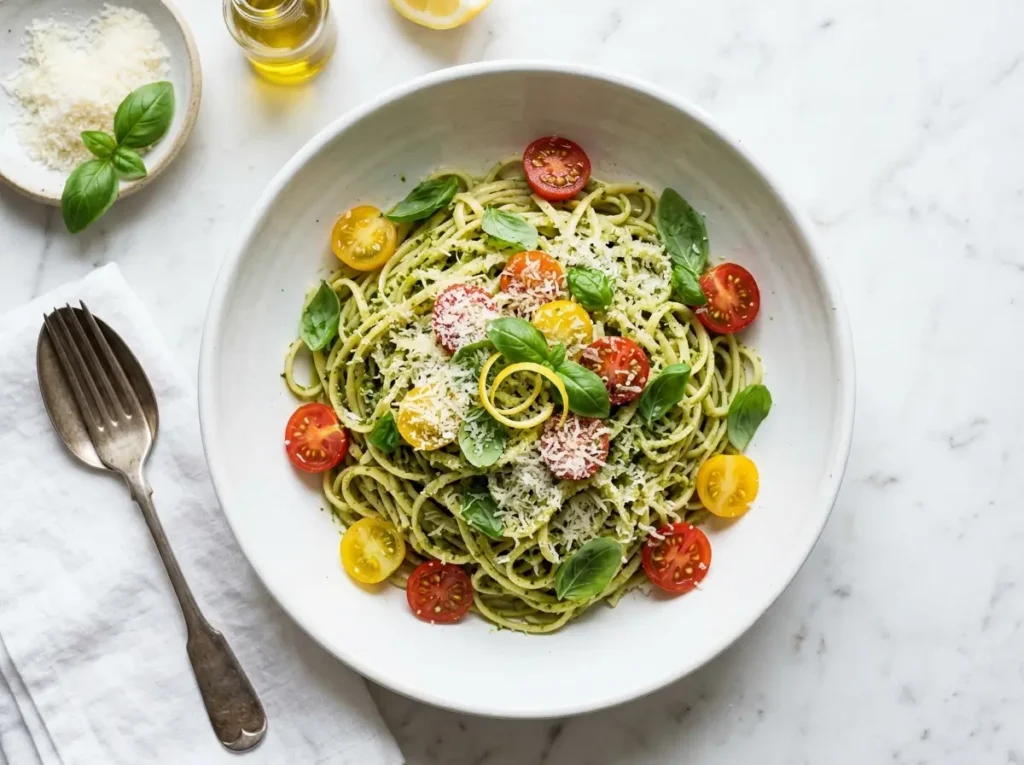
- Spaghetti or linguine — the classic pairing; toss with a splash of pasta water for a silky, restaurant-quality sauce
- Grilled salmon or sea bass — lemon pesto was practically made for fish; the citrus amplifies the natural seafood flavor. Try it drizzled over our Honey Glazed Salmon for an elevated dinner
- Roasted vegetables — spoon generously over a Roasted Veggie Bowl for an instant flavor upgrade
- Grilled chicken or shrimp — use as a marinade before cooking or a sauce after
- Bruschetta or crostini — spread thickly on toasted bread as an appetizer with cherry tomatoes
- Shrimp and orzo — a dream pairing; try it stirred through our Shrimp and Orzo Recipe for a complete Mediterranean meal
- Pizza base — swap tomato sauce for lemon pesto under mozzarella and arugula
🥛 Beverages:
- Sparkling water with lemon slices — keeps the palate fresh and complements the citrus notes
- Crisp Pinot Grigio or Vermentino — the ideal Italian white wine pairing that enhances the lemon’s brightness
Expert Tips for Perfect Lemon Pesto
✅ Avoid the white pith at all costs — the bitter pith underneath the yellow zest will ruin the entire batch; take your time peeling only the bright yellow layer
✅ Toast your pine nuts first — 3–4 minutes in a dry pan over medium heat transforms their flavor from bland to deep, nutty, and complex
✅ Use room temperature ingredients — cold olive oil emulsifies poorly; let everything sit at room temperature for 10 minutes before blending
✅ Drizzle oil slowly — adding olive oil gradually while the blender runs creates a properly emulsified, glossy sauce rather than a greasy separated one
✅ Season at the end — lemon and Parmesan are both naturally salty; always taste before adding any extra salt to avoid over-seasoning
✅ Cover with oil before storing — pour a thin layer of olive oil over the top of the pesto before sealing the jar; it acts as a natural seal and keeps the sauce fresh and vibrant green
✅ Freeze in ice cube trays — portion fresh pesto into ice cube trays, freeze solid, then transfer to bags; each cube = one perfect pasta serving
Storage & Freezing Instructions
| Storage Method | Duration | Pro Tip |
|---|---|---|
| Refrigerator | Up to 1 week | Cover surface with thin layer of olive oil to prevent browning |
| Freezer | Up to 3 months | Freeze in ice cube trays first, then transfer to zip bags |
| Counter | Same day only | Keep covered and use within a few hours of making |
Serving from frozen: Drop frozen pesto cubes directly into hot pasta or a warm pan — they melt into a perfect sauce in under 2 minutes with no quality loss.
Nutrition Per Serving (Approximate)
| Nutrient | Amount | % Daily Value |
|---|---|---|
| Calories | 101 | — |
| Protein | 3g | 6% |
| Carbohydrates | 2g | 1% |
| Fat | 10g | 13% |
| Fiber | 0.5g | 2% |
| Vitamin C | 14mg | 16% |
| Calcium | 82mg | 6% |
Based on 2 tablespoon serving, approximately 12 servings per batch
Lemon Pesto Troubleshooting
| Problem | Cause | Fix |
|---|---|---|
| Bitter taste | White pith included in zest | Nothing to fix this batch — next time peel more carefully using only yellow layer |
| Too thick / paste-like | Not enough oil or liquid | Add olive oil or 1–2 tbsp pasta water and blend again until loosened |
| Too oily / separated | Oil added too fast | Re-blend slowly, drizzling oil in a thin steady stream |
| Lost green color | Oxidation from air exposure | Cover surface with olive oil before storing; consume within 5 days |
| Flavor too sharp | Too much lemon juice | Add extra Parmesan + a pinch of sugar to balance acidity |
Frequently Asked Questions
❓ Can I make lemon pesto without pine nuts?
Absolutely — toasted almonds are the best substitute and give a slightly earthier, nuttier flavor at a fraction of the cost. Walnuts, cashews, or sunflower seeds also work well in a 1:1 swap. Each nut variety produces a slightly different flavor profile but all make a delicious pesto.
❓ How do I know when my lemon pesto is the right consistency?
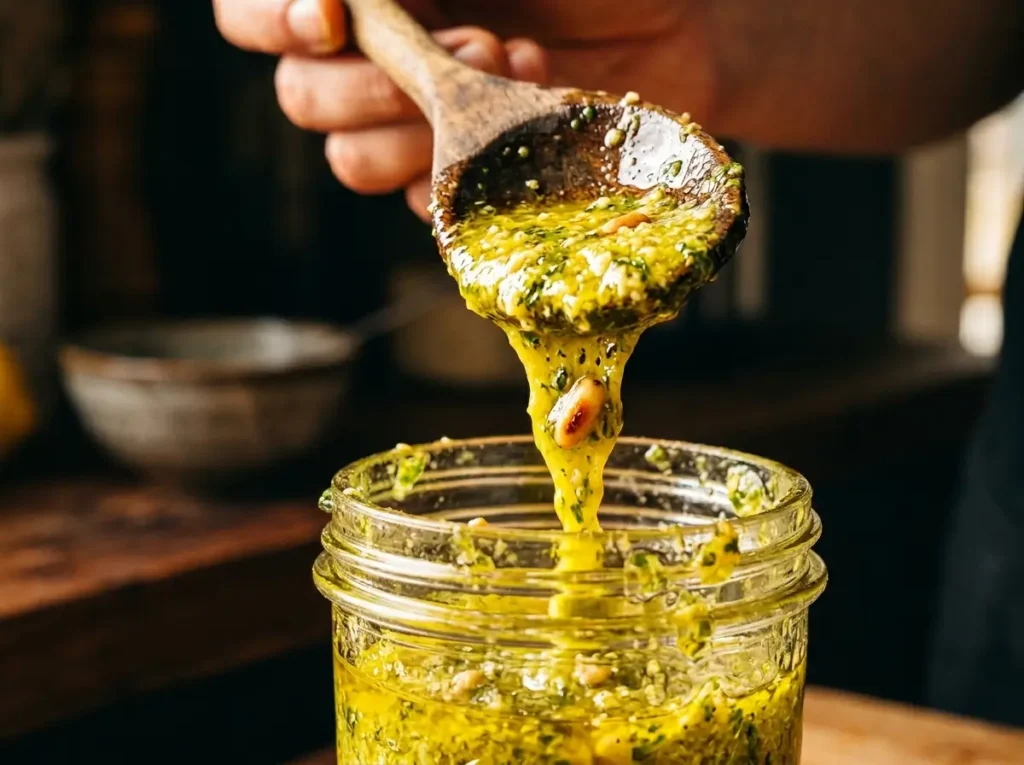
Perfect lemon pesto should be thick enough to coat a spoon but loose enough to drip slowly off it. If using for pasta, it should be slightly looser — stir in pasta water one tablespoon at a time until it flows easily and coats every strand evenly.
❓ Why does my lemon pesto taste bitter?
The most common cause is white pith from the lemon making its way into the blend. The pith is intensely bitter and cannot be masked once blended in. Always use a sharp Y-peeler and take your time removing only the bright yellow zest layer.
❓ Can I make lemon pesto vegan?
Yes — replace the Parmigiano-Reggiano with an equal amount of nutritional yeast (3–4 tablespoons) for the same savory umami depth without any dairy. The texture and flavor remain very close to the original.
❓ How long does homemade lemon pesto last?
Stored in an airtight glass jar with an olive oil seal on top, lemon pesto lasts up to 1 week in the refrigerator. Frozen in ice cube trays, it maintains excellent quality for up to 3 months and goes straight from freezer to pan with no thawing required.