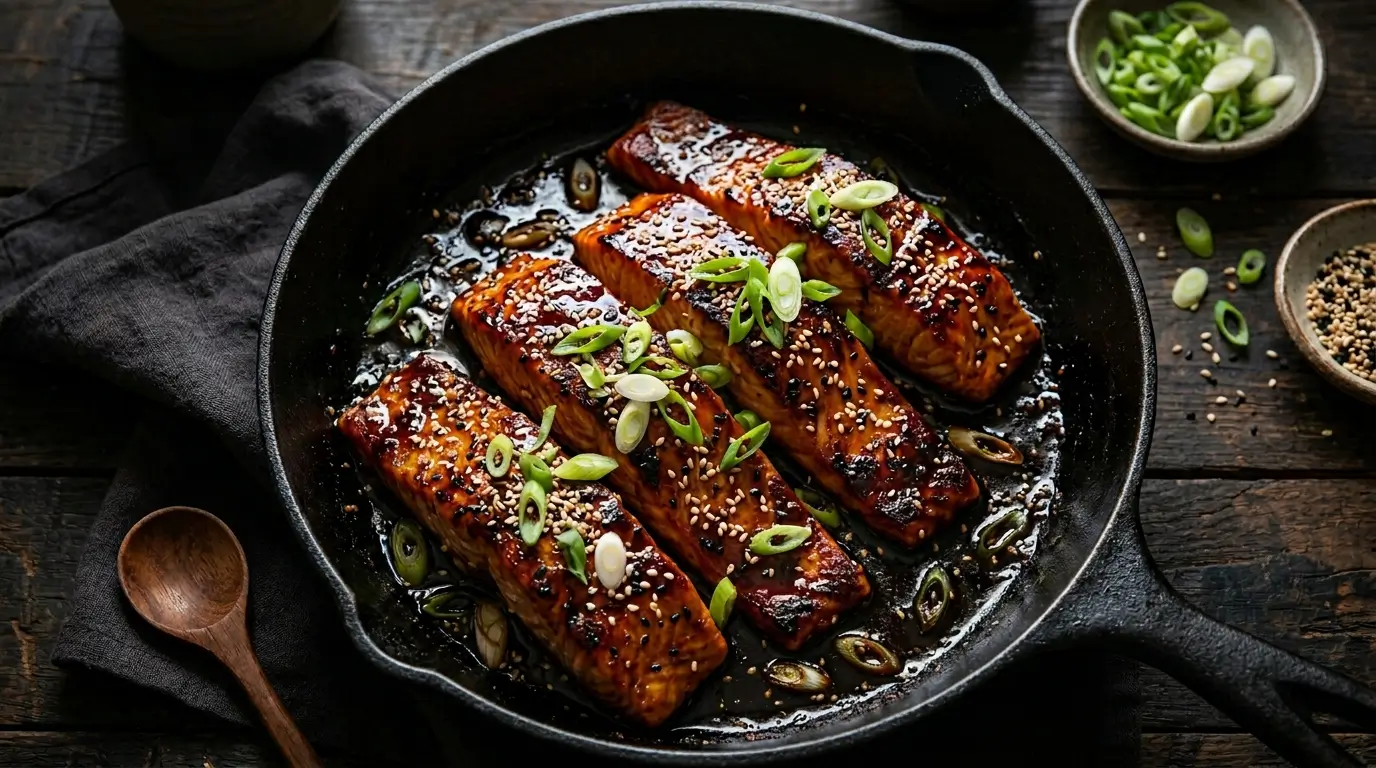



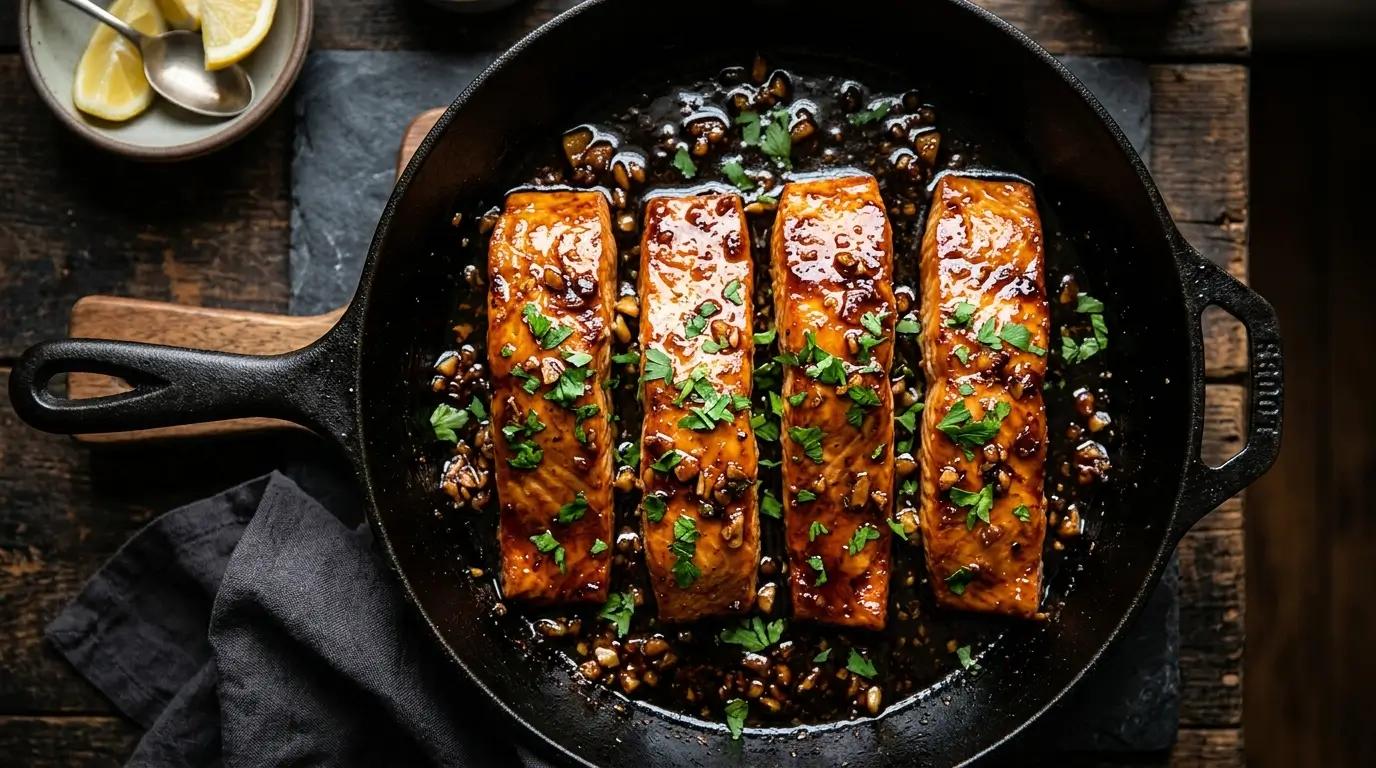
If you’ve ever wondered how restaurants get that stunning, caramelized, sticky-sweet finish on salmon, this salmon glaze recipe collection is about to reveal every secret. Whether you love a classic honey garlic glaze, a bold brown sugar soy combination, or a sophisticated miso finish, these salmon glaze recipes transform a simple fillet into a showstopping dinner in under 30 minutes. Once you master even one of these glazes, plain pan-seared salmon will never satisfy you again.
Table of Contents
What Is Salmon Glaze & Why You’ll Love It
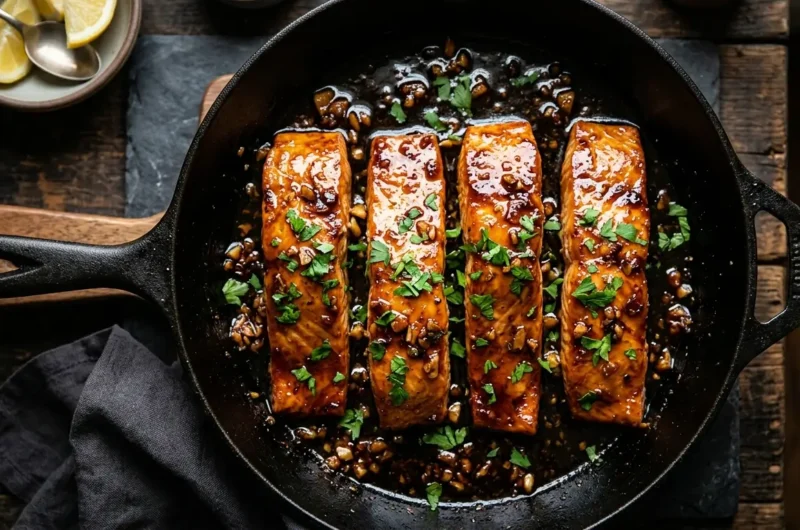
A salmon glaze is a thick, concentrated sauce brushed or spooned over salmon fillets during cooking that caramelizes under heat to create a deeply flavored, sticky, glossy coating on the surface of the fish. Unlike a marinade that works before cooking, a glaze is applied during the cooking process — typically in the last few minutes — which allows the natural sugars to caramelize and bond directly to the salmon’s surface, creating that iconic restaurant-quality finish.
According to The Chunky Chef, the secret to a truly great glazed salmon lies in the broiling step — finishing the glazed salmon under a hot broiler for 5–6 minutes after pan cooking caramelizes the sugars in the glaze, creating those gorgeous sticky, slightly charred edges that make every bite irresistible. The beauty of making your own salmon glaze at home is that you control the balance of sweet, salty, acidic, and savory — something no store-bought sauce can ever replicate at the same quality level.
Salmon is one of the most nutritionally dense proteins available — loaded with omega-3 fatty acids, high-quality protein, and vitamins B12 and D. A well-crafted glaze not only elevates the flavor but also makes salmon approachable for people who find plain fish too mild or too fishy, because the bold glaze flavors complement and balance the natural richness of the fish perfectly.
Key Benefits:
- Ready in under 30 minutes — most glazes take 5 minutes to make and salmon cooks in 15–20 minutes
- Only 4–6 ingredients per glaze — simple pantry staples you already have create extraordinary flavor
- Endlessly versatile — 5 completely different glaze profiles to suit every mood and occasion
- Naturally gluten-free adaptable — swap regular soy sauce for tamari and every glaze becomes gluten-free
- Meal prep friendly — glazes can be made 3–5 days ahead and stored in the fridge
- Impressive enough for guests — looks and tastes like a restaurant dish with minimal effort
🍳 Equipment You’ll Need (4 Items)
- Oven-safe skillet or cast iron pan (essential for the stovetop-to-broiler method that creates the best caramelized glaze)
- Pastry brush or spoon (for basting and applying the glaze evenly over the salmon surface)
- Instant-read thermometer (salmon is perfectly cooked at 125–130°F for medium; 145°F for fully cooked)
- Small saucepan (for reducing and thickening the glaze to the right consistency before applying)
How to Make Salmon Glaze Recipe (Best Homemade Salmon Glaze Recipes 2026)
Course: sauce, DinnerCuisine: AmericanDifficulty: Easy4
servings5
minutes20
minutes380
kcal25
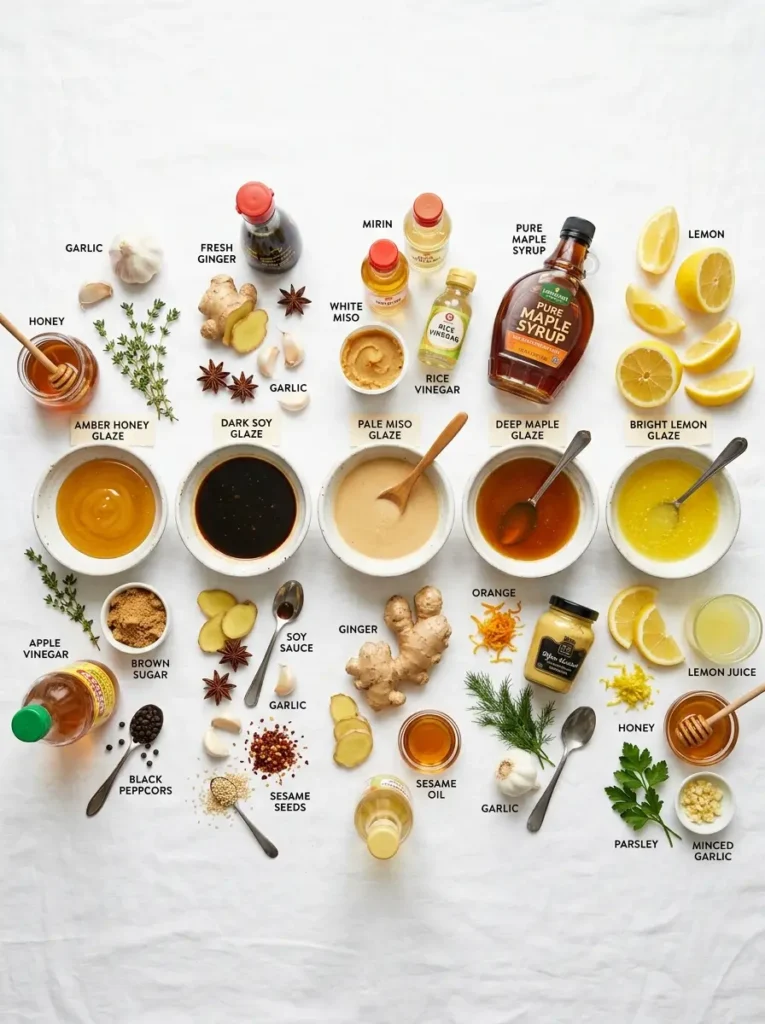
minutesA collection of 5 easy homemade salmon glaze recipes — honey garlic soy, brown sugar Dijon, miso ginger, maple bourbon, and lemon herb. Each glaze takes just 5 minutes to make and transforms any salmon fillet into a stunning, caramelized restaurant-quality dinner in under 30 minutes.
Ingredients
🍯 Honey Garlic Soy Glaze (Most Popular):
3 tbsp honey
2 tbsp soy sauce (or tamari for gluten-free)
3 garlic cloves, minced
1 tbsp fresh lemon juice
1 tsp sesame oil (optional)
🍂 Brown Sugar Dijon Glaze:
3 tbsp brown sugar, packed
1 tbsp Dijon mustard
1 tbsp olive oil
2 garlic cloves, minced
½ tsp smoked paprika
🥢 Miso Ginger Glaze:
2 tbsp white miso paste
1 tbsp mirin
1 tbsp sake (or dry sherry)
1 tsp fresh ginger, grated
1 tsp sesame oil
🍁 Maple Bourbon Glaze:
3 tbsp pure maple syrup
1 tbsp bourbon
1 tbsp soy sauce
½ tsp smoked paprika
Pinch of cayenne pepper
🍋 Lemon Herb Glaze:
Zest + juice of 1 lemon
1 tbsp honey
1 tbsp Dijon mustard
1 tbsp olive oil
1 tbsp fresh dill, chopped
For the Salmon:
4 salmon fillets (170g / 6oz each), skin-on
½ tsp salt
¼ tsp black pepper
½ tsp smoked paprika
1 tbsp olive oil (for searing)
Directions
- Pat salmon fillets completely dry with paper towels on all sides.
- Season both sides with salt, black pepper, and smoked paprika.
- In a small bowl, whisk together all ingredients for your chosen glaze until smooth and combined.
- Heat olive oil in an oven-safe skillet over medium-high heat until shimmering.
- Place salmon fillets skin-side up and sear for 3–4 minutes until deep golden crust forms. Flip.
- Brush or spoon glaze generously over the top of each fillet.
- Transfer skillet to oven and broil on middle rack at high broil for 5–6 minutes, basting once more halfway through.
- Remove from oven when internal temperature reaches 125–130°F for medium or 145°F for fully cooked.
- Rest 2–3 minutes before serving to allow glaze to set and juices to redistribute.
Recipe Video
Notes
- Pat salmon completely dry — moisture prevents the glaze from adhering and caramelizing properly; this step is non-negotiable
- Add glaze only in the last 5–8 minutes — applying it too early causes the sugars to burn before the salmon cooks through
- Use the middle oven rack for broiling — too close to the broiler burns the glaze before the salmon finishes cooking
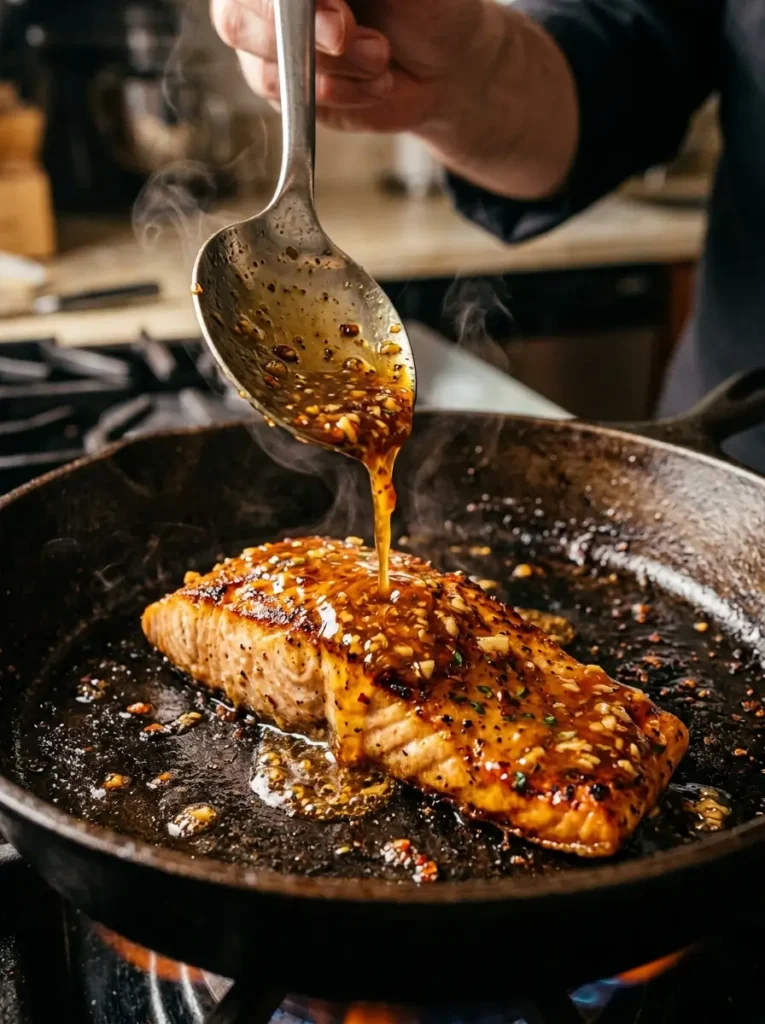
- Baste multiple times — spooning the pan glaze back over the salmon 2–3 times builds a thicker, more flavorful coating
Salmon Glaze Variations (5 Ways)
The Honey Garlic Soy glaze is the most beginner-friendly and crowd-pleasing — if this is your first time making glazed salmon, start here. The Miso Ginger variation is the most sophisticated and impressive for dinner parties.
What To Serve With Salmon Glaze Recipe (Perfect Pairings)
The rich, bold flavors of a glazed salmon call for sides that either complement its sweetness or provide a clean, neutral contrast.
🥗 Food Pairings:
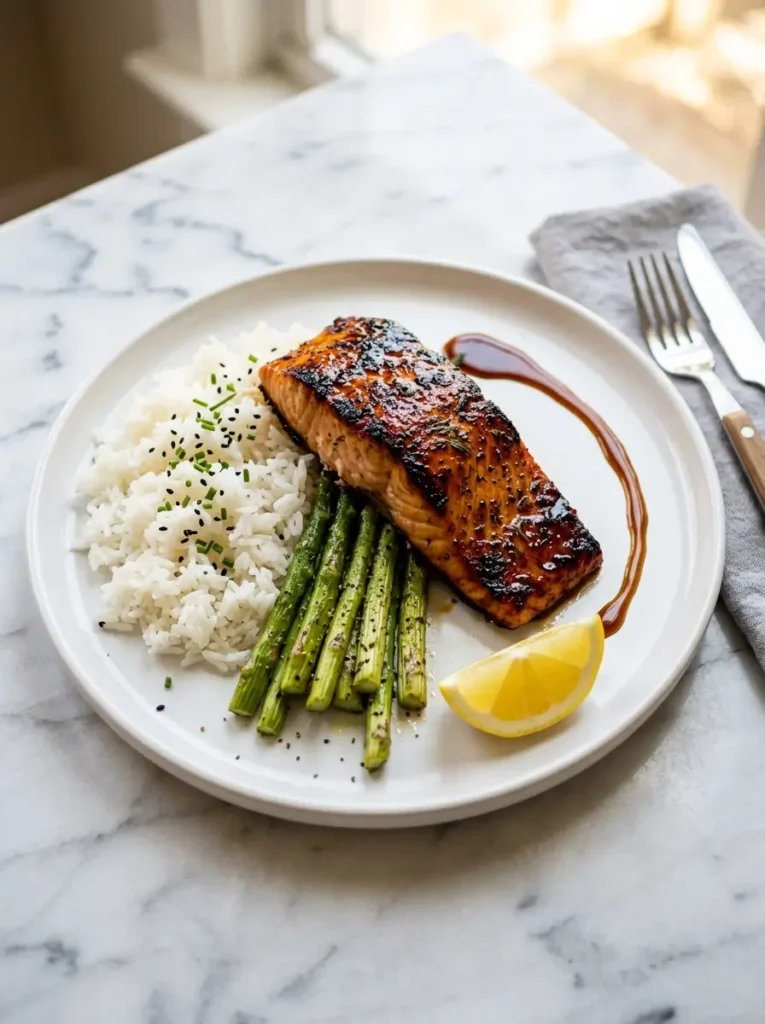
- Steamed jasmine or coconut rice — absorbs the extra glaze beautifully and balances the bold flavors
- Roasted asparagus or broccolini — the slight bitterness cuts through the sweetness of the glaze perfectly
- Roasted veggie bowl — spoon glazed salmon over our Roasted Veggie Bowl for a complete, stunning meal
- Shrimp and orzo — pair lighter glazed salmon with our Shrimp and Orzo Recipe for an elevated seafood dinner
- Mashed potatoes or cauliflower mash — creamy, neutral base that lets the glaze shine as the star
- Simple green salad — dressed lightly with lemon and olive oil to keep things fresh and balanced
- Honey glazed salmon — already a firm favorite on the blog; see our full Honey Glazed Salmon Recipe for the complete deep-dive version
🥛 Beverages:
- Crisp Sauvignon Blanc or Pinot Gris — the acidity cuts beautifully through the rich glazed salmon
- Sparkling water with lemon and cucumber — light, refreshing, and palate-cleansing between bites
Expert Tips for Perfect Salmon Glaze
✅ Pat salmon completely dry before glazing — moisture on the surface of the fish prevents the glaze from adhering and caramelizing properly; always dry with paper towels first
✅ Season the salmon before the glaze — salt, pepper, and smoked paprika applied directly to the fish first means every layer is seasoned, not just the surface coating
✅ Never apply glaze too early — add the glaze in the last 5–8 minutes of cooking; adding it at the start causes the sugars to burn before the salmon is cooked through
✅ Broil for caramelization — the broiler is the secret weapon; 5–6 minutes under high broil transforms a good glaze into a sticky, caramelized, restaurant-quality crust
✅ Baste multiple times — spoon the pan glaze back over the salmon 2–3 times during cooking for maximum flavor buildup and a thicker coating
✅ Middle oven rack for broiling — placing the rack too high causes the glaze to burn before the salmon finishes cooking; middle position = perfect caramelization
✅ Rest before serving — let glazed salmon rest 2–3 minutes after cooking; this allows the glaze to set and the juices to redistribute for a more succulent result
Storage & Freezing Instructions
| Storage Method | Duration | Pro Tip |
|---|---|---|
| Refrigerator (cooked) | 3 days | Store in airtight container; reheat gently to avoid drying out |
| Freezer (cooked) | 1 month | Wrap tightly in plastic then foil; thaw overnight in fridge |
| Glaze only (uncooked) | 5 days in fridge | Make glaze ahead and store separately; brush on fresh salmon when ready |
Reheating ranked best to worst:
- Oven at 275°F for 10–15 min — gentle heat preserves moisture and glaze texture best
- Skillet on low with splash of water — steam reheats without drying the fish
- Microwave — last resort; use 50% power in 30-second bursts to avoid overcooking
Nutrition Per Serving (Approximate)
| Nutrient | Amount | % Daily Value |
|---|---|---|
| Calories | 380 | — |
| Protein | 34g | 68% |
| Carbohydrates | 18g | 7% |
| Fat | 18g | 23% |
| Omega-3 | 2.5g | — |
| Sodium | 520mg | 23% |
Based on honey garlic glaze, one 170g/6oz salmon fillet per serving
Salmon Glaze Troubleshooting
Frequently Asked Questions
❓ What is the best glaze for salmon?
The best glaze depends on your flavor preference, but the Honey Garlic Soy combination is the most universally loved — its balance of sweet honey, savory soy, and pungent garlic complements the natural richness of salmon better than any other combination. For a more sophisticated profile, the Miso Ginger glaze is the choice of most professional chefs.
❓ How do I know when glazed salmon is perfectly cooked?
The most reliable method is an instant-read thermometer — salmon is perfectly cooked to medium at 125–130°F internal temperature and fully cooked at 145°F. Visually, the flesh should be opaque on the outside but still slightly translucent and deeply pink in the very center for medium doneness.
❓ Can I make salmon glaze ahead of time?
Yes — all five glaze recipes can be made up to 5 days ahead and stored in an airtight container in the refrigerator. Simply whisk or stir before using as glazes can separate slightly when cold. This makes weeknight dinners effortless — just grab your pre-made glaze, pat the salmon dry, and cook.
❓ Can I use frozen salmon for glazed salmon recipes?
Yes — thaw completely in the refrigerator overnight, then pat extremely dry before applying any glaze. Frozen salmon releases more moisture than fresh, so thorough drying is even more critical to achieve proper caramelization and glaze adhesion.
❓ How long does glazed salmon last in the fridge?
Cooked glazed salmon keeps for up to 3 days in an airtight container in the refrigerator. For best texture and flavor, consume within the first 2 days. Reheat gently at low temperature to avoid drying out the fish.